



THE ROLE OF TEMPERATURE CONTROL IN THE PLASTICS INDUSTRY
In plastic manufacturing sectors such as injection molding, extrusion, blow molding, shoe sole molding, and compounding, temperature control plays a critical role in ensuring product quality and operational efficiency. A key characteristic of the plastics industry is continuous equipment operation with high heat generation, requiring mold and hydraulic oil temperatures to remain stable throughout the entire production process.
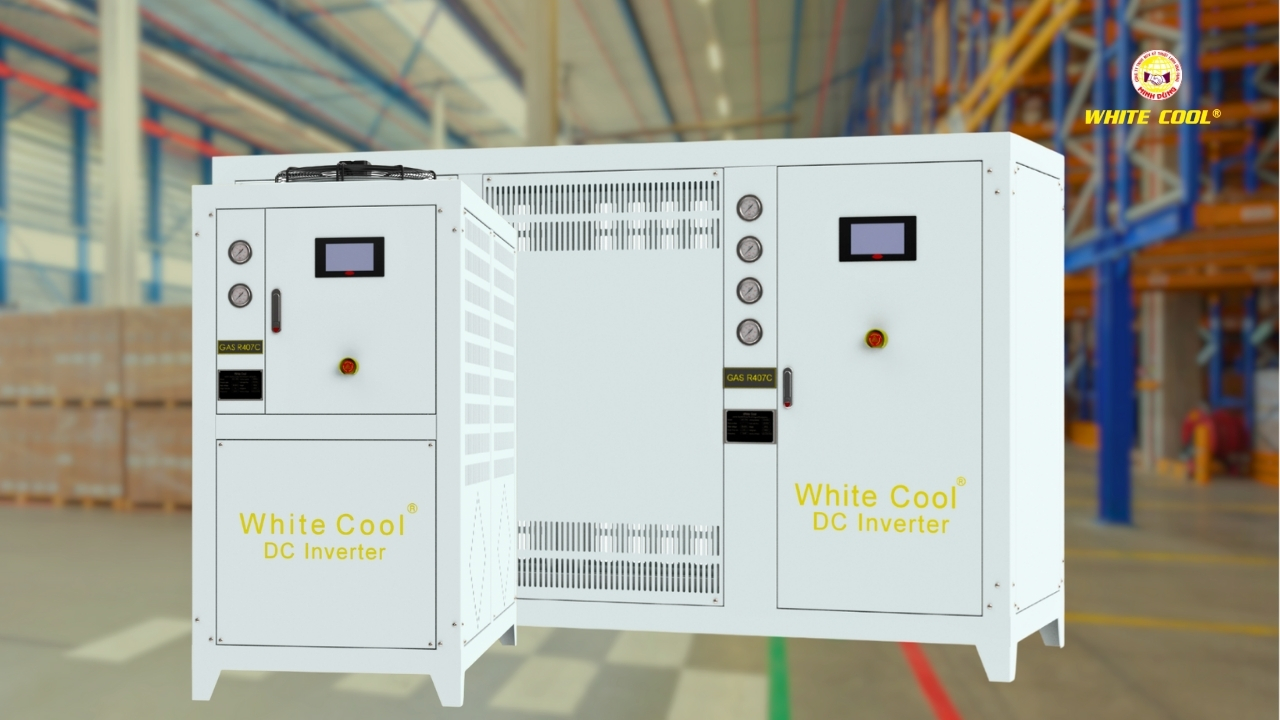
The cooling system not only determines the stability of the molding cycle but also affects surface quality, dimensional accuracy, and equipment durability. Therefore, more factories are turning to DC Inverter chillers for the plastics industry as an effective alternative to traditional On/Off chillers, aiming to reduce energy costs and enhance long-term operational stability.
SPECIFIC COOLING DEMANDS IN THE PLASTICS INDUSTRY
Cooling targets in a plastics production line
In a complete plastics manufacturing line, the chiller system typically serves multiple components, including:
- Plastic molds: require stable temperatures to ensure accurate molding and minimize warpage.
- Screw and barrel of injection machines: generate substantial heat during material heating and compression.
- Hydraulic oil: needs continuous cooling to maintain stable pressure and viscosity.
- Pick-and-place robots and auxiliary equipment: require suitable temperature conditions for precise and reliable operation.
Common issues with inadequate cooling
When cooling systems fail to meet technical requirements, plastic manufacturers often encounter:
- Large temperature fluctuations causing warped parts, surface voids, or dimensional inaccuracies.
- Extended molding cycles due to molds not reaching optimal temperatures.
- Increased energy consumption because injection machines and chillers operate under overload conditions.
- Accelerated wear of molds, components, and hydraulic oil.
These challenges highlight the need for a cooling solution that is precise, continuous, and energy-efficient, capable of handling the variable load characteristics of plastic production.
WHAT IS A DC INVERTER CHILLER AND WHY IS IT SUITABLE FOR THE PLASTICS INDUSTRY?
DC Inverter operating principle in chillers
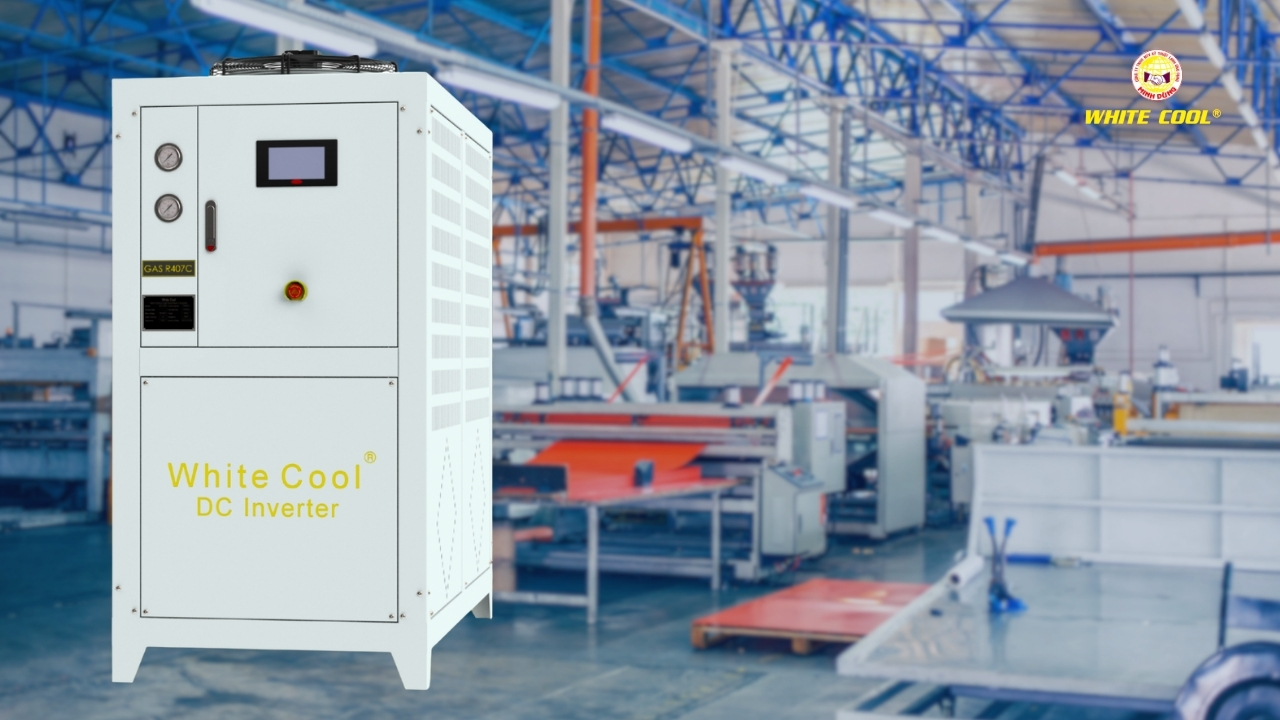
Unlike conventional On/Off chillers that operate at a fixed capacity, DC Inverter chillers use DC inverter compressors capable of modulating output based on actual thermal load. As cooling demand increases or decreases, the compressor automatically adjusts its speed instead of starting and stopping abruptly.
As a result, chilled water temperature is maintained within a tight range of ±0.5–1°C, meeting the stringent requirements of plastic molds and production equipment.
Key benefits for plastic factories
Implementing a DC Inverter chiller for the plastics industry offers clear advantages:
- Energy savings of approximately 30–45% compared to conventional chillers.
- Reduced electrical shock and vibration, extending compressor lifespan.
- Well-suited for 24/7 production with continuously fluctuating loads.
- Easy integration with multiple injection molding machines of different capacities.
These benefits have made DC Inverter chillers a growing trend in modern plastics manufacturing facilities.
COMPARISON BETWEEN DC INVERTER CHILLERS AND CONVENTIONAL CHILLERS IN PLASTICS APPLICATIONS
Compared to traditional chillers, DC Inverter chillers show clear superiority in plastics applications. While conventional On/Off chillers experience large temperature fluctuations and high energy consumption due to frequent start-stop cycles, DC Inverter chillers operate smoothly, maintain stable temperature control, and significantly reduce electricity costs.
In addition, equipment lifespan is extended thanks to fewer compressor start-ups, making DC Inverter chillers better suited to the continuous and stability-driven demands of the plastics industry.
DC INVERTER CHILLER SOLUTIONS FOR THE PLASTICS INDUSTRY FROM WHITE COOL
Specialized design approach
White Cool develops DC Inverter chillers for the plastics industry with a clear focus on handling variable loads, delivering precise temperature control, and ensuring stable multi-shift operation. Each system is engineered based on the specific characteristics of individual plastics production lines.
Water-cooled DC Inverter chiller – White Cool
White Cool’s water-cooled DC Inverter chillers are suitable for medium to large-scale plastic factories using centralized cooling systems. Key advantages include high COP efficiency, superior temperature stability for molds, and long-term energy cost optimization.
Air-cooled DC Inverter chiller – White Cool
For small to mid-scale plastic workshops or facilities with limited space, air-cooled DC Inverter chillers offer a flexible solution. These systems require no cooling towers, feature quick installation, simple maintenance, and maintain stable performance under Vietnam’s climatic conditions.
White Cool’s engineering capabilities
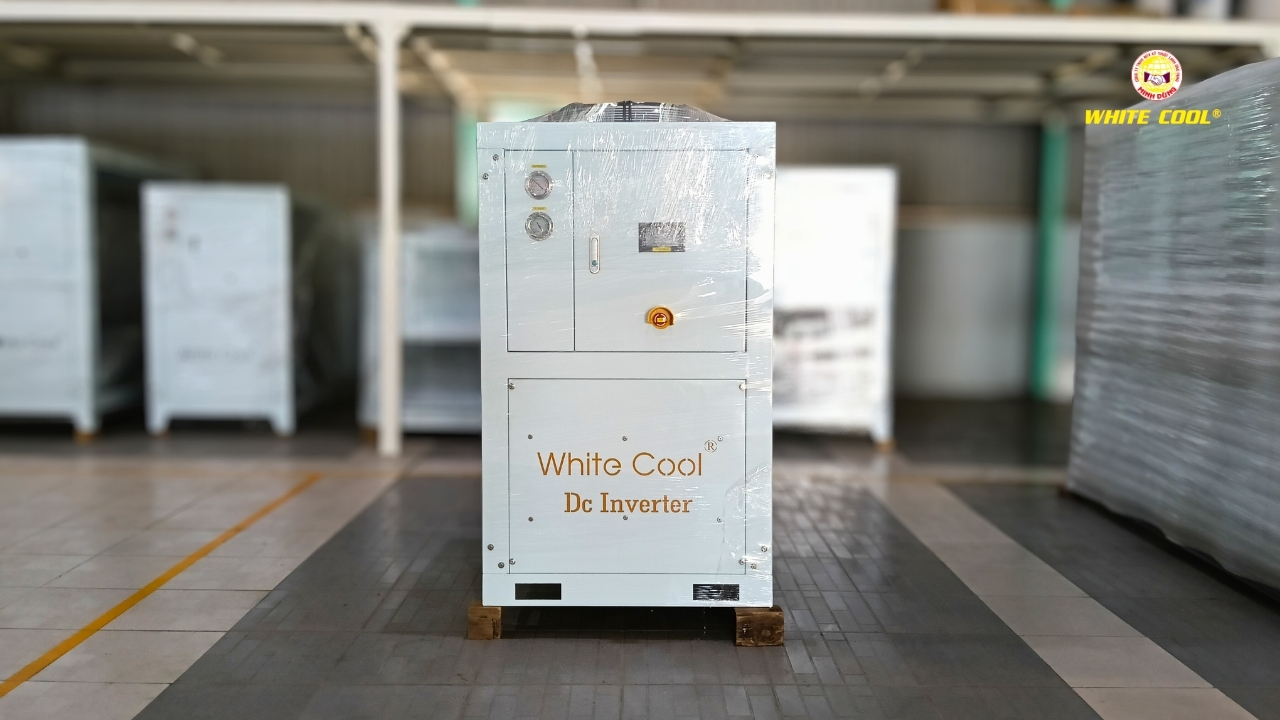
White Cool designs and manufactures chillers in Vietnam, enabling customized solutions for individual injection molding lines. With strong quality control and ODM services for B2B customers, White Cool meets strict technical and project schedule requirements.
PRACTICAL GUIDELINES FOR SELECTING A DC INVERTER CHILLER FOR THE PLASTICS INDUSTRY
When selecting a DC Inverter chiller, manufacturers should accurately determine the total thermal load of injection machines and the number of molds operating simultaneously. It is also recommended to choose a capacity range with sufficient reserve margin to ensure stable operation during production expansion.
Priority should be given to genuine DC Inverter compressors, PID control systems, and suppliers with proven experience in plastics applications to ensure long-term efficiency and reliability.
CONCLUSION
A DC Inverter chiller for the plastics industry is an effective solution for reducing operating costs, stabilizing production, and extending equipment lifespan. With strong engineering expertise and flexible customization capability, White Cool offers a full range of DC Inverter chillers—both water-cooled and air-cooled—suitable for various scales of plastic manufacturing facilities.
Contact White Cool for professional consultation and a DC Inverter chiller solution tailored to your plastics production line.