



AMBIENT TEMPERATURE DIRECTLY AFFECTS THE OPERATING PRINCIPLE OF A CHILLER
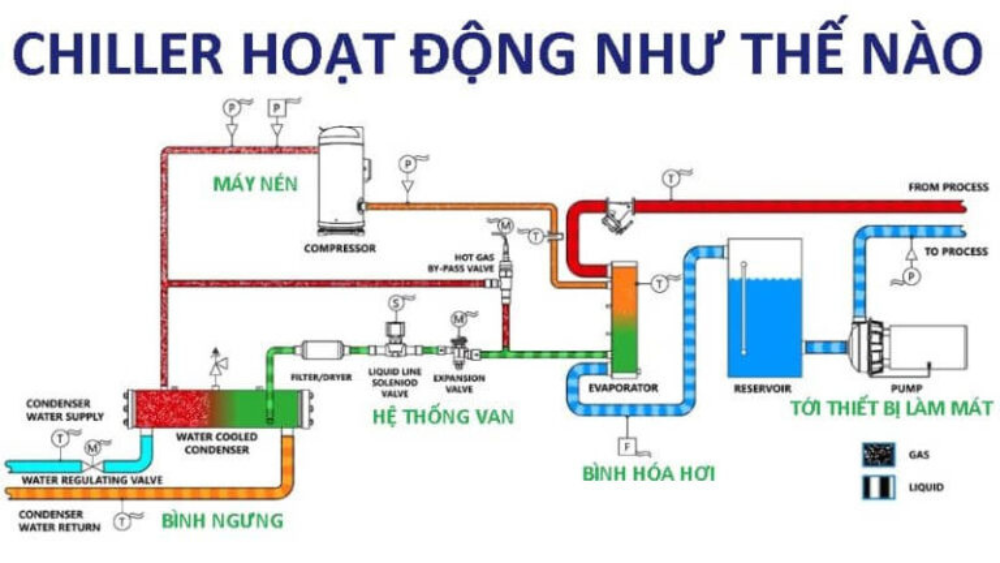
Chillers operate on the principle of heat exchange, where heat is absorbed from the water or air inside the plant and released to the outside environment through the condenser. This is a key process that determines the cooling efficiency of the entire system.
When the ambient temperature increases, the heat dissipation capacity of the condenser is significantly reduced. The temperature difference between the refrigerant and the outside environment decreases, causing the heat transfer process to be slower and less efficient. At this time, the condensing pressure in the system increases, forcing the compressor to operate at a higher intensity to ensure cooling capacity.
Continuous operation of the compressor under high pressure conditions not only increases electricity consumption but also makes the entire system less stable than under the initial standard conditions.
DECREASED EFFICIENCY AND INCREASED ELECTRICITY COSTS
In actual operation, when ambient temperatures rise, the efficiency of chillers often decreases significantly. Cooling capacity no longer reaches the optimal level as designed, while electricity consumption tends to increase.
The reason lies in the system having to work longer and harder to achieve the same required temperature. This is especially noticeable in air-cooled chiller systems, where the entire heat exchange process depends directly on the surrounding air. When the air heats up, cooling efficiency decreases, leading to longer operating times and increased electricity consumption.
In many cases, businesses may see a sharp increase in electricity bills during the hot season even though production capacity remains unchanged, and the main reason is the decline in chiller system efficiency.
INCREASED RISK OF OVERLOAD AND IMPACT ON EQUIPMENT LIFESPAN
When operating in high-temperature environments for extended periods, chillers are prone to overloading. Compressors, condensers, fans, and pumps all operate at high power continuously, leading to faster-than-normal wear and tear.
Prolonged high pressure can cause frequent system shutdowns due to overload, or worse, damage to critical components. The compressor – the most expensive component in a chiller – is the most severely affected when operating under suboptimal conditions.
If not controlled promptly, these impacts will significantly reduce equipment lifespan and lead to increased maintenance and repair costs. In a manufacturing environment, this also poses a risk of operational disruption, directly impacting productivity and timelines.
DIFFERENCES IN THE IMPACT OF DIFFERENT TYPES OF CHILLERS
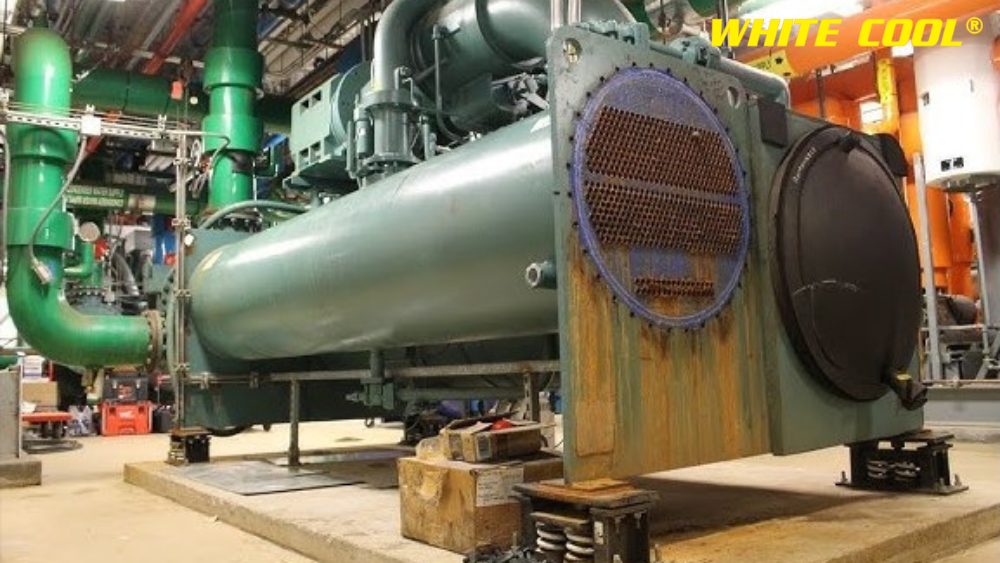
Not all chiller systems are affected equally by ambient temperature. The degree of impact depends heavily on the cooling method used by the system. For air-cooled chillers, ambient temperature has the most direct and noticeable impact. When the air temperature rises, the heat exchange capacity decreases sharply, causing the system's efficiency to decline rapidly.
Meanwhile, water-cooled chillers use cooling towers to support the heat dissipation process. Therefore, the system is less directly dependent on air temperature. However, if the ambient temperature is too high or the cooling tower is not operated efficiently, the cooling capacity will still be affected and the system's efficiency will still decline.
Choosing the right type of chiller for the climate conditions and specific operating requirements is therefore crucial in ensuring long-term efficiency.
SOLUTIONS FOR STABLE CHILLER SYSTEM OPERATION IN HIGH TEMPERATURE CONDITIONS
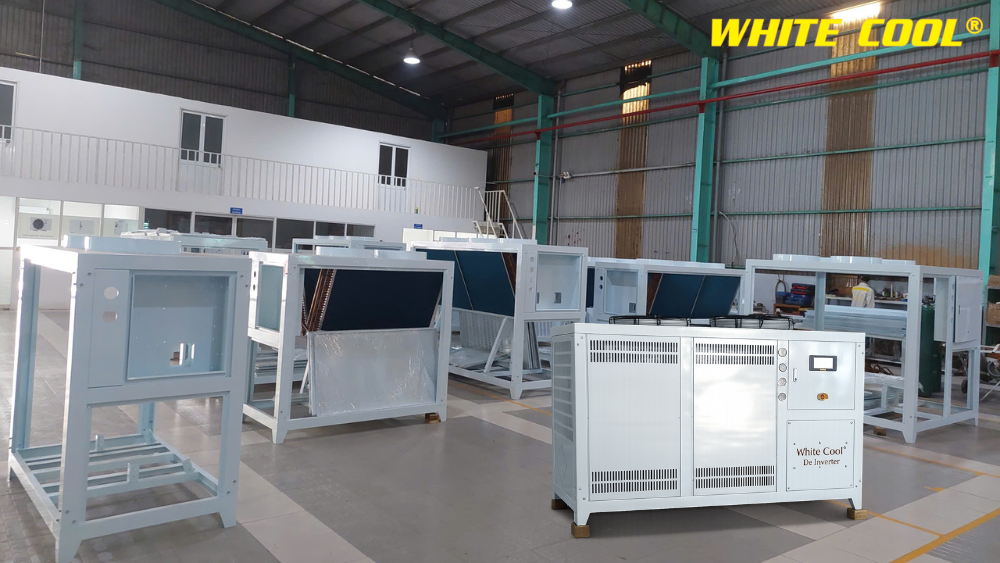
To minimize the negative impact of ambient temperature, businesses need a holistic approach from the design phase to actual operation. In the design phase, the selection of chiller capacity should take into account the need for a buffer for high temperature conditions, especially during the hot season. This helps prevent the system from overloading when the ambient temperature exceeds normal levels.
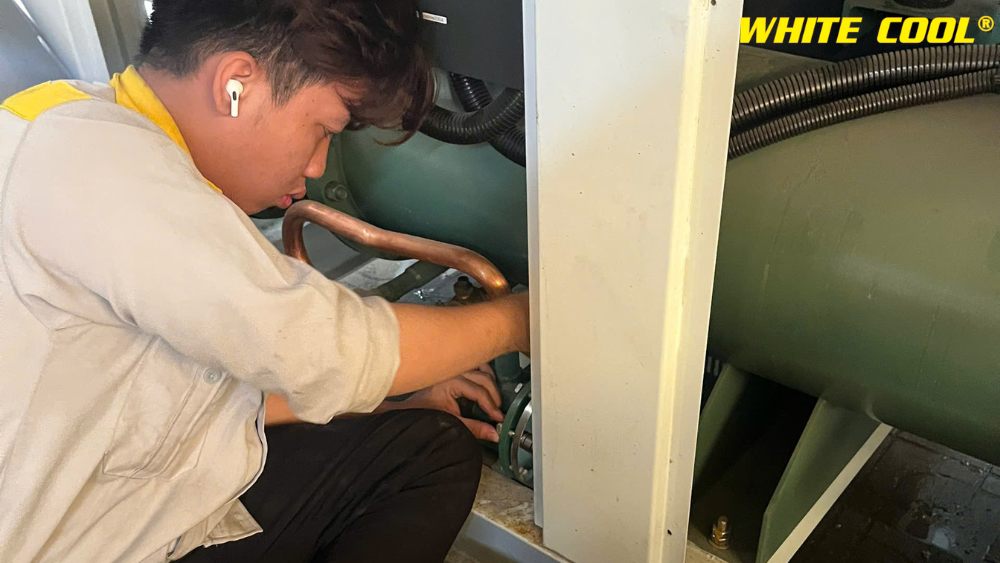
During operation, maintaining heat exchange efficiency is crucial. Condensers, evaporators, and cooling towers need to be cleaned regularly to ensure they are not clogged, which hinders heat transfer. At the same time, parameters such as water flow rate, pressure, and temperature also need to be closely monitored.
Furthermore, the application of intelligent control solutions such as inverters and sensor systems helps the chiller automatically adjust its power output according to actual demand. As a result, the system does not operate beyond its capacity, saving energy and reducing stress on the equipment.
CONCLUSION
Ambient temperature is a factor that directly and profoundly affects the performance, durability, and operating costs of chiller systems. In increasingly harsh climates, understanding and controlling this factor is no longer an option but a mandatory requirement for manufacturing businesses.
A properly designed chiller system, operating optimally and adapting well to environmental conditions, not only ensures stable production but also provides long-term benefits in energy and cost savings. This is a crucial foundation for businesses to improve operational efficiency and maintain a sustainable competitive advantage.
Contact White Cool for immediate advice and support on solutions for your business!