



WHAT IS EXPORT PLASTIC PACKAGING? COMMON CLASSIFICATIONS
Definition of export plastic packaging
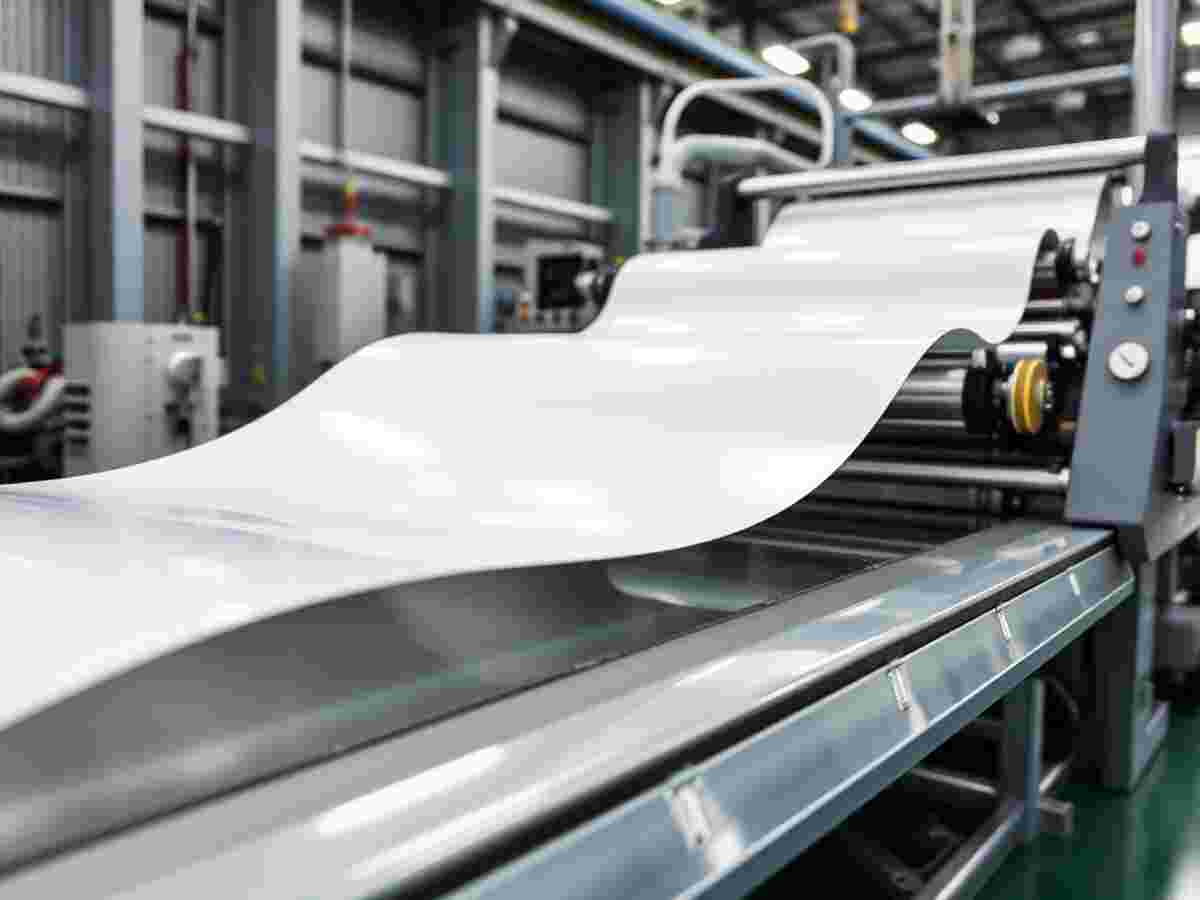
Export plastic packaging refers to plastic packaging products manufactured specifically for overseas markets, strictly complying with international standards for safety, quality, and environmental responsibility. The production of export plastic packaging requires high consistency across batches, clear traceability, and long-term operational stability throughout the manufacturing process.
Common types of export plastic packaging
Currently, export plastic packaging can be divided into three main categories. The first is flexible packaging, such as PE, PP, and PA bags or multilayer laminated films used in food and fast-moving consumer goods. The second category is rigid packaging, including PET bottles, plastic containers, and thermoformed trays. The third group is technical packaging, such as blister packs, ESD trays, and medical packaging—products that demand extremely high precision and strict quality control.
(Quote from network source) MANDATORY INTERNATIONAL STANDARDS FOR EXPORT PLASTIC PACKAGING
Quality and safety standards
To be accepted in major global markets, export plastic packaging must comply with stringent regulations such as FDA (USA), EU Regulations, RoHS, and REACH. In addition, quality management systems like ISO 9001, ISO 22000, and HACCP (for food packaging) are considered essential requirements.
Technical manufacturing standards
Beyond certifications, packaging products must ensure uniform thickness, high tensile strength, excellent airtightness, and smooth surfaces free from pores or deformation. Even minor deviations during production can result in entire shipments being classified as non-compliant.
Environmental standards
The growing emphasis on recyclable packaging, CO₂ emission reduction, and ESG compliance is placing increasing pressure on manufacturers. Export-oriented businesses are no longer selling products alone—they are also selling sustainability commitments. In this context, temperature control and process stability become decisive factors.
(Quote from network source) CHALLENGES IN EXPORT PLASTIC PACKAGING PRODUCTION
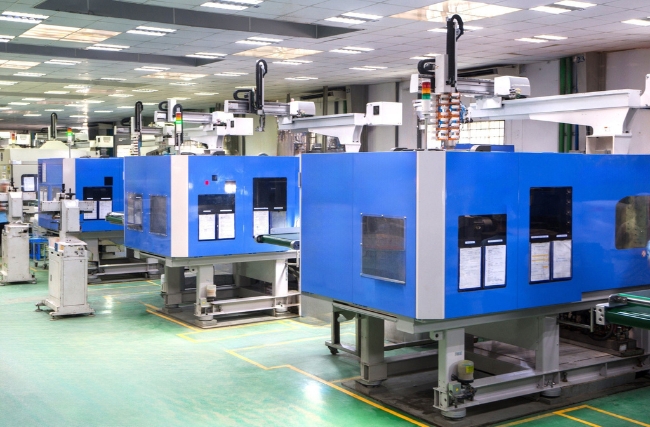
One of the most common challenges is inconsistent product quality across production shifts. Issues such as warpage, shrinkage, or dimensional deviations often stem from unstable mold temperatures and uneven cooling water control. In addition, extended molding cycles caused by inefficient cooling lead to increased cycle times and significantly higher energy consumption. For export plastic packaging factories, electricity costs typically account for a substantial portion of total operating expenses. More critically, every export shipment must pass rigorous inspections; even a small defect can result in rejected goods or contract penalties, causing considerable financial losses.
(Quote from network source) THE ROLE OF CHILLER SYSTEMS IN EXPORT PLASTIC PACKAGING PRODUCTION
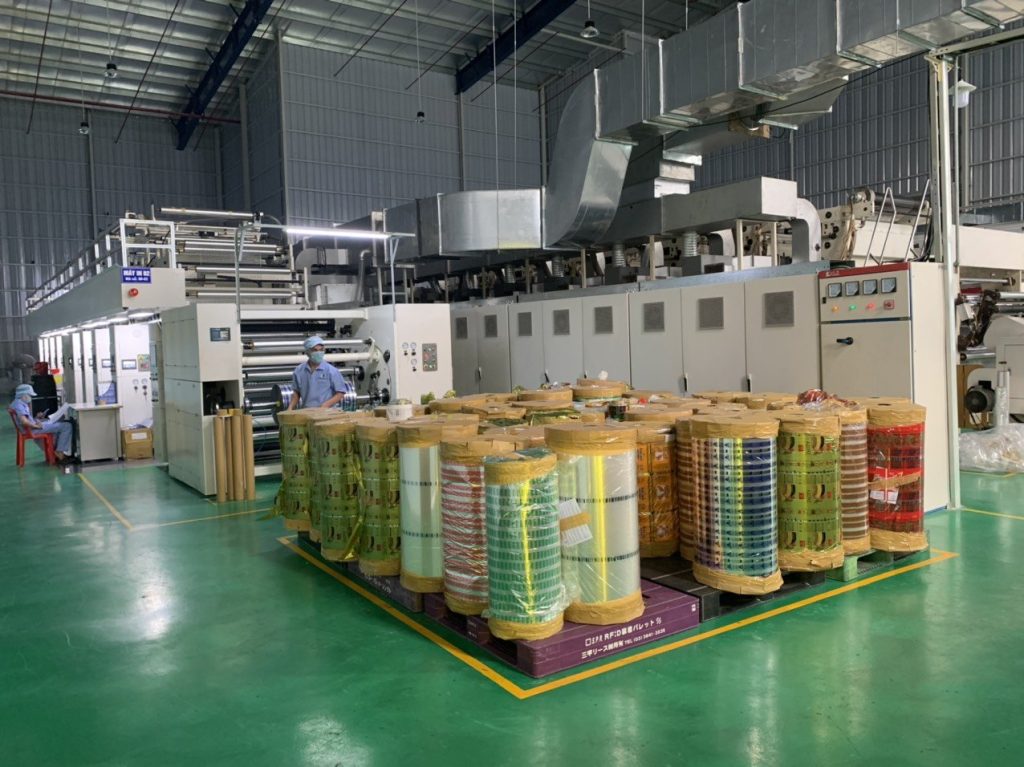
Under these conditions, chiller systems play a central role in cooling solutions for the plastic packaging industry. Chillers ensure stable mold temperatures and consistent cooling water conditions, helping shorten molding cycles and increase productivity per shift. With precise temperature control, surface defects and warpage are significantly reduced, improving the rate of export-qualified products. More importantly, such stability enables manufacturers to pass international customer audits more easily and maintain long-term credibility.
WHITE COOL DC INVERTER CHILLER SOLUTIONS – SUBTLE BRAND PROMOTION
Why should export packaging factories choose DC Inverter chillers?
Unlike conventional chillers, DC Inverter chillers can flexibly adjust capacity based on actual load demand. This capability allows energy savings of 20–40%, particularly effective for export plastic packaging factories operating continuously 24/7. Reduced thermal shock during cooling also contributes to longer mold and injection machine lifespan.
Air-cooled and water-cooled chillers from White Cool
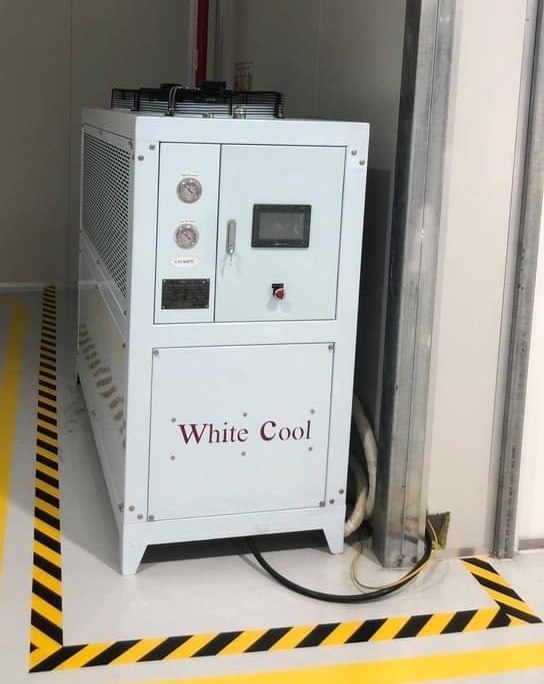
White Cool offers a wide range of DC Inverter chillers air-cooled and water-cooled suitable for both flexible and rigid packaging plants. Designed specifically for industrial environments, White Cool chillers integrate seamlessly with injection molding, blow molding, and thermoforming lines, ensuring stable and reliable long-term operation.
Direct benefits for export-oriented manufacturers
With efficient temperature control, manufacturers can stabilize product quality, increase the percentage of export-qualified orders, and reduce electricity costs. At the same time, lower energy consumption and reduced emissions support green manufacturing goals and help meet ESG requirements from international partners.
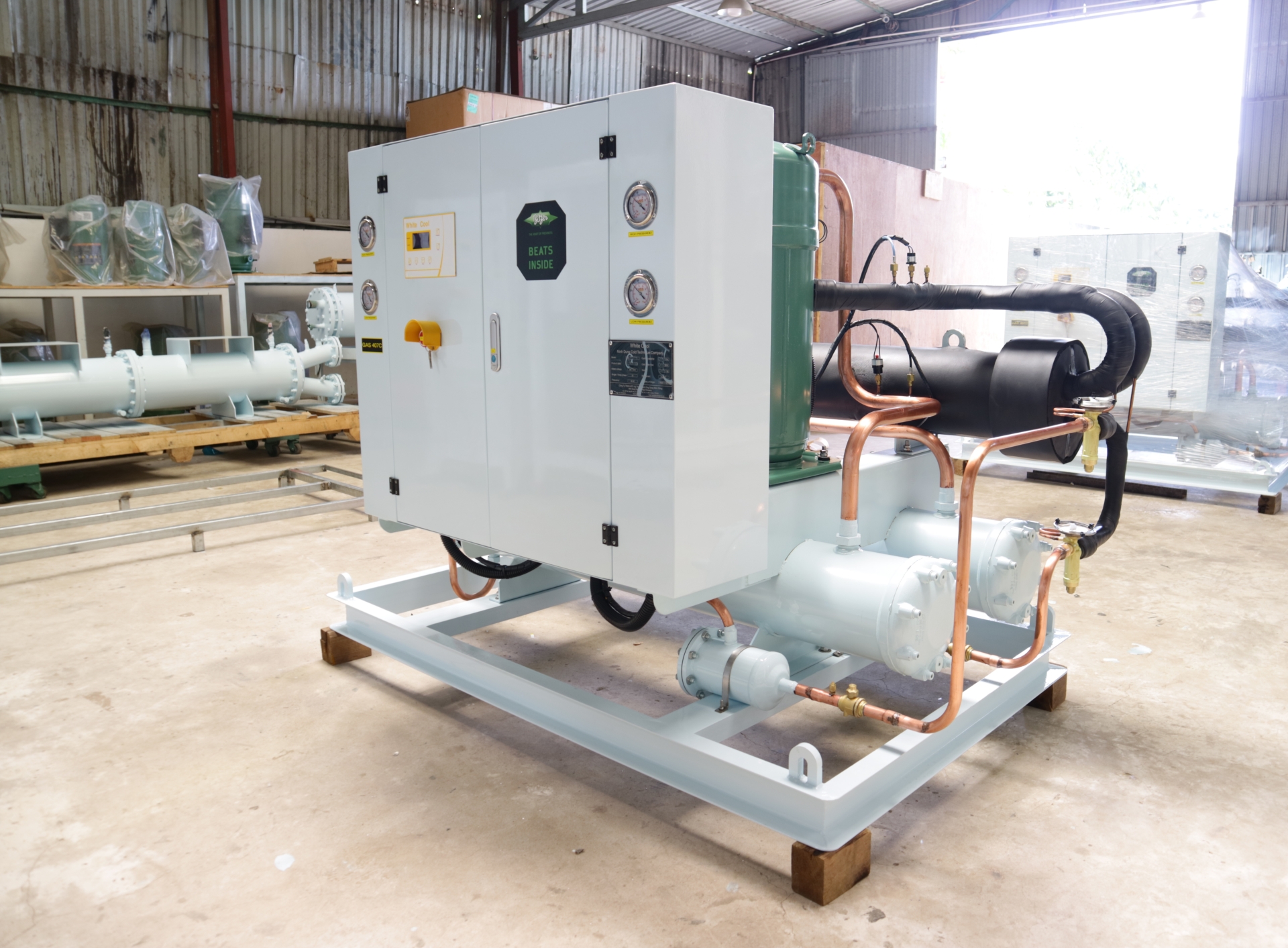
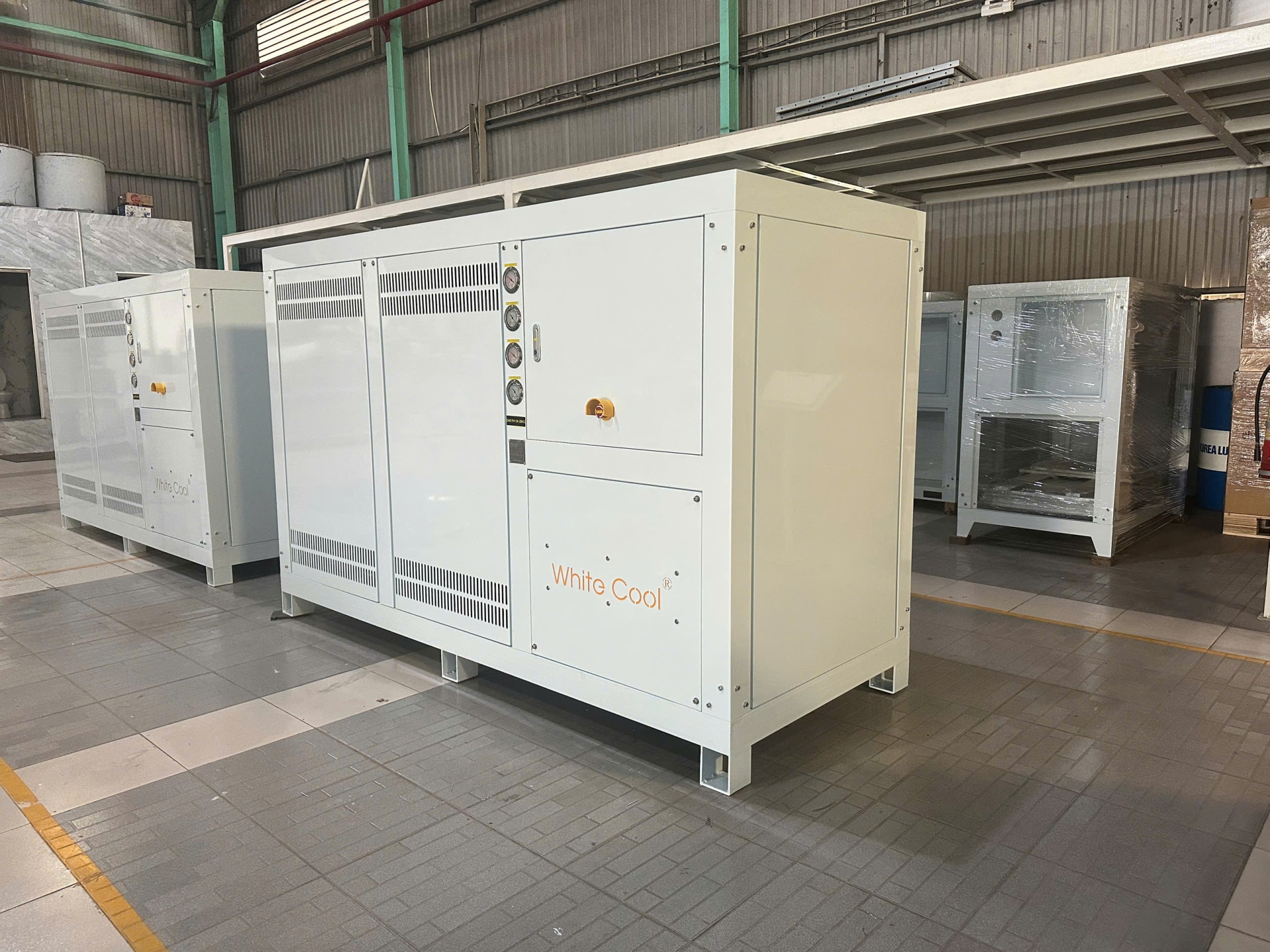
(Chillers the company is manufacturing) CONCLUSION
Today, export plastic packaging is no longer competitive based on price alone—it increasingly depends on technology, quality consistency, and energy efficiency. Companies seeking sustainable growth must invest strategically in efficient cooling systems as a foundation for stable quality and optimized operating costs. White Cool is ready to accompany plastic packaging manufacturers on their journey toward higher international standards and more efficient operations.
Contact White Cool today for expert consultation on DC Inverter chiller solutions and receive a detailed quotation tailored to your factory.