



HEAT LOAD - A CORE FACTOR DETERMINING CHILLER CAPACITY
When it comes to selecting chiller capacity, the most important factor is not the machine's power but the total heat load the system needs to handle. This heat load comes not only from the production machinery but also includes heat generated from the surrounding environment, people, lighting systems, and other auxiliary equipment.
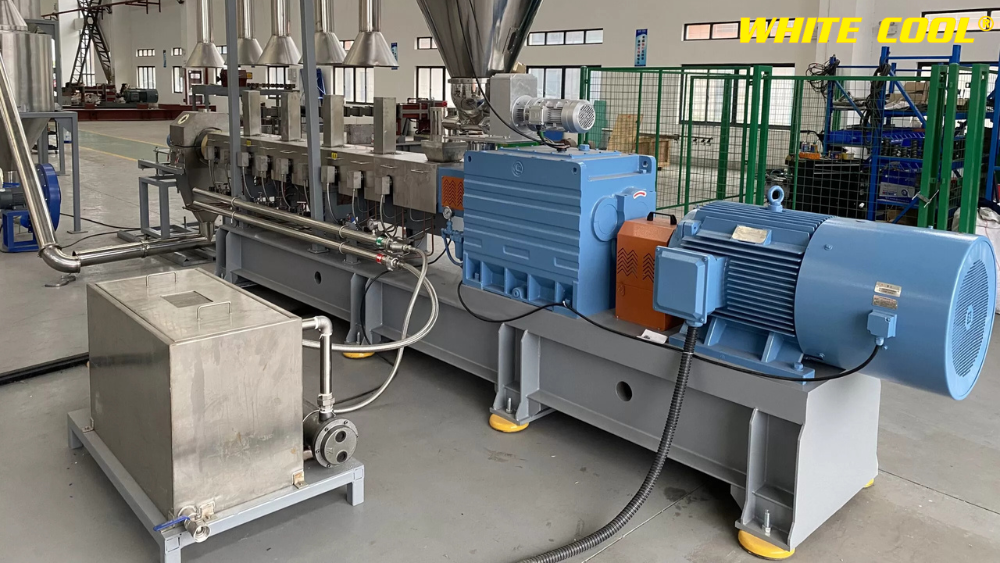
In reality, each industry will have completely different heat load characteristics. For example, in the plastics industry, the heat generated from molding and cooling is very large and continuous, requiring the chiller to operate stably under high load. Meanwhile, the food or pharmaceutical industries require tight temperature control, not only sufficient load but also ensuring accuracy.
Therefore, heat load calculations need to be based on actual factory data, rather than rough estimates. This is the foundation for choosing the right chiller capacity from the start.
UNDERSTANDING POWER UNITS AND TECHNICAL SPECIFICATIONS
During the chiller selection process, many businesses often encounter difficulties when comparing power units such as kW, RT (Refrigeration Ton), or HP. 1 RT is equivalent to approximately 3.517 kW. Although conversions are possible, it's more important to understand the conditions under which the manufacturer specifies these parameters.
A chiller with a high nominal capacity may not necessarily operate efficiently under the actual conditions of the factory. For example, the same equipment, when placed in a high-temperature environment, may experience a significant decrease in efficiency compared to the standard specifications.
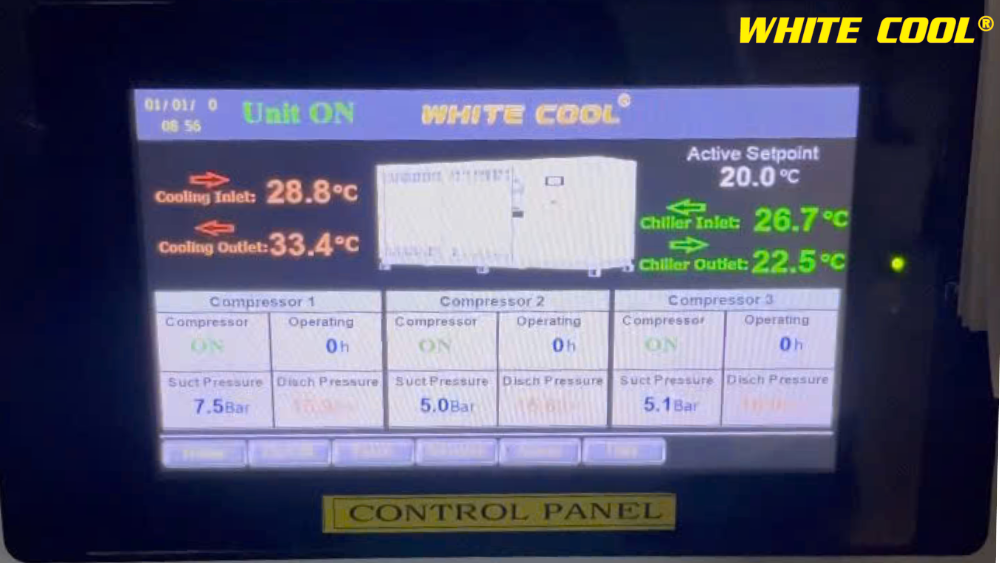
Therefore, instead of just looking at the numbers, businesses need to consider the actual capacity under specific operating conditions, including ambient temperature, inlet and outlet water temperatures, and load conditions.
ENVIRONMENTAL IMPACT AND OPERATING MODE
In Vietnam, especially during the hot season, ambient temperatures can rise continuously for many months. This forces chillers to operate at higher loads than standard conditions. Without proper planning, the system can easily become overloaded during peak hours.
In addition, the operating mode is also a crucial factor. A factory operating 24/7 with stable load will have a completely different chiller capacity and configuration choice compared to a factory operating in shifts or seasonally.
Therefore, on-site surveys and analysis of operating habits are indispensable steps to ensure the system's long-term efficient operation.

CAPACITY RESERVE - THE BALANCE BETWEEN SAFETY AND COST
In chiller system design, capacity reserve is always a crucial factor. However, determining the appropriate reserve level requires experience.
Typically, a reserve level of 10-20% is considered safe to accommodate load fluctuations or future production expansion plans. This reserve level prevents the system from running out of steam when demand increases or environmental conditions become harsher.
However, an excessively large reserve will require higher initial investment in equipment, while also reducing operational efficiency due to the machine frequently running at low load. Therefore, balancing safety and economic efficiency is key.
CHOOSING THE RIGHT CHILLER FOR YOUR CAPACITY AND INSTALLATION CONDITIONS
Not only capacity, but the choice of chiller type also directly affects operational efficiency. The two most common types currently are air-cooled chillers and water-cooled chillers, each suitable for specific conditions.
Air-cooled chillers are generally suitable for factories with limited space or those that do not want to invest in additional cooling tower systems. Advantages include quick installation and simple operation, but efficiency may be affected when ambient temperatures rise.
Conversely, water-cooled chillers require more complex auxiliary systems but offer higher efficiency and greater energy savings in the long term. This is often the optimal choice for large-scale factories operating continuously and with high load requirements.
THE ROLE OF CONSULTING FIRM IN CHILLER CAPACITY SELECTION
In reality, selecting chiller capacity is not just a calculation, but a combination of technical expertise, experience, and practical operational knowledge. A professional consulting firm will help businesses accurately assess heat load, select the appropriate configuration, and optimize investment costs.
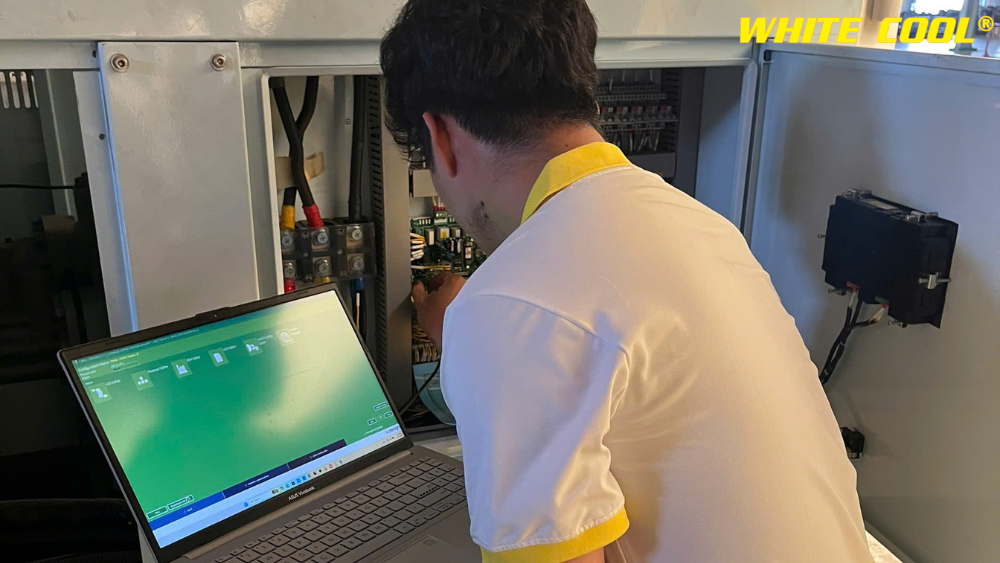
At White Cool, each chiller solution is designed based on on-site surveys and the specific needs of each factory. Beyond simply supplying equipment, our technical team provides ongoing support throughout the installation, operation, and maintenance process, ensuring the system always achieves optimal performance.
CONCLUSION
Choosing the right chiller capacity not only ensures stable cooling system operation but is also key to optimizing operating costs and extending equipment lifespan. This is a strategic decision with long-term impacts on the company's production efficiency.
To achieve optimal results, the company needs to approach this problem systematically, from determining the heat load and analyzing operating conditions to selecting the appropriate solution. Most importantly, collaborating with a specialized firm will help minimize risks and ensure the right investment from the start.
Contact White Cool today to get expert advice on the most suitable chiller capacity for your factory!