


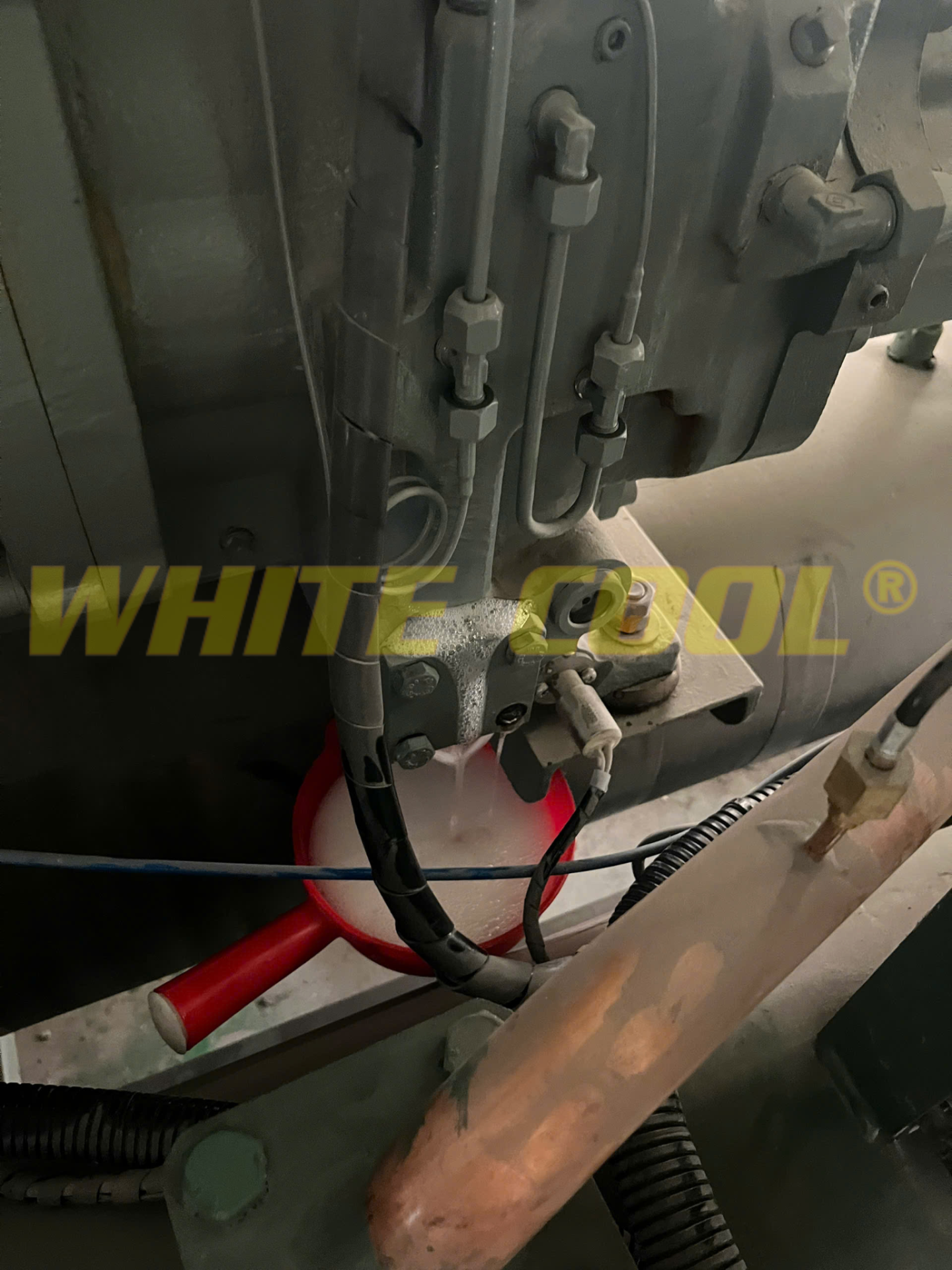
OVERPRESSURE
This is the most common fault, causing the chiller to automatically shut off to protect the compressor.
-
Causes:
- Coolant water flow through the condenser is too low
- Cooling tower is dirty or the cooling tower fan is malfunctioning
- Condenser is scaled up, reducing heat exchange capacity
- Excess refrigerant (gas)
-
Solution:
- Check and clean the water filter, check the condition of the cooling water pump
- Clean the cooling tower and check the belt/fan motor
- Perform descaling with specialized chemicals for the condenser periodically
- Bleed some gas if the static pressure is higher than the manufacturer's specified level
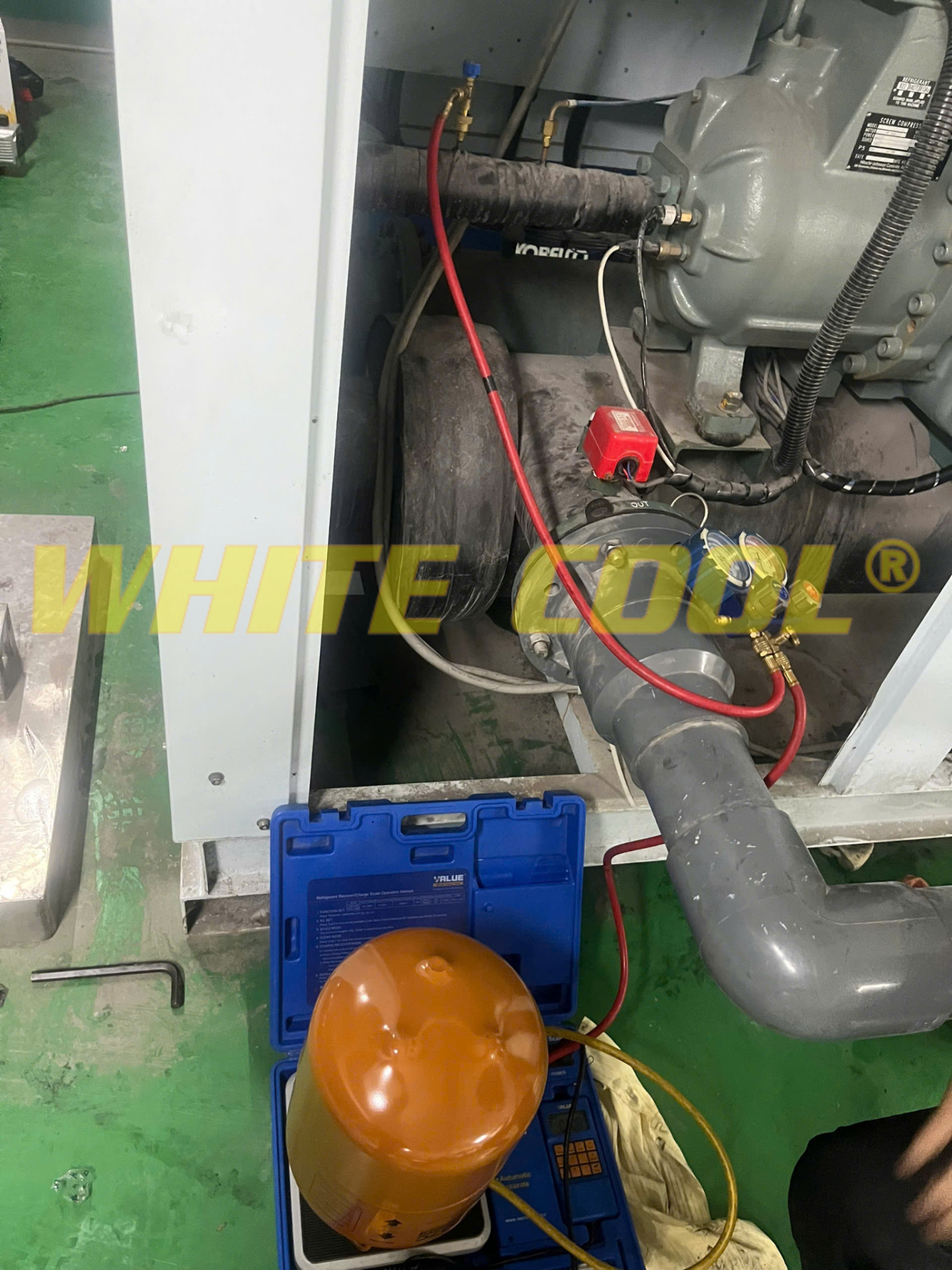
UNDERPRESSURE
When the gas pressure drops too low, the system will report an error to prevent freezing of the copper pipes or damage to the compressor.
-
Causes:
- Gas leak in the system
- Insufficient chilled water flow through the evaporator
- Clogged gas filter
- Misfunctioning expansion valve
-
Solution:
- Use a leak detector to locate the leak, repair the leak, and refill the gas
- Check the chilled water pump and ensure all valves on the pipeline are fully open
- Replace the gas filter
- Adjust or replace the expansion valve if necessary
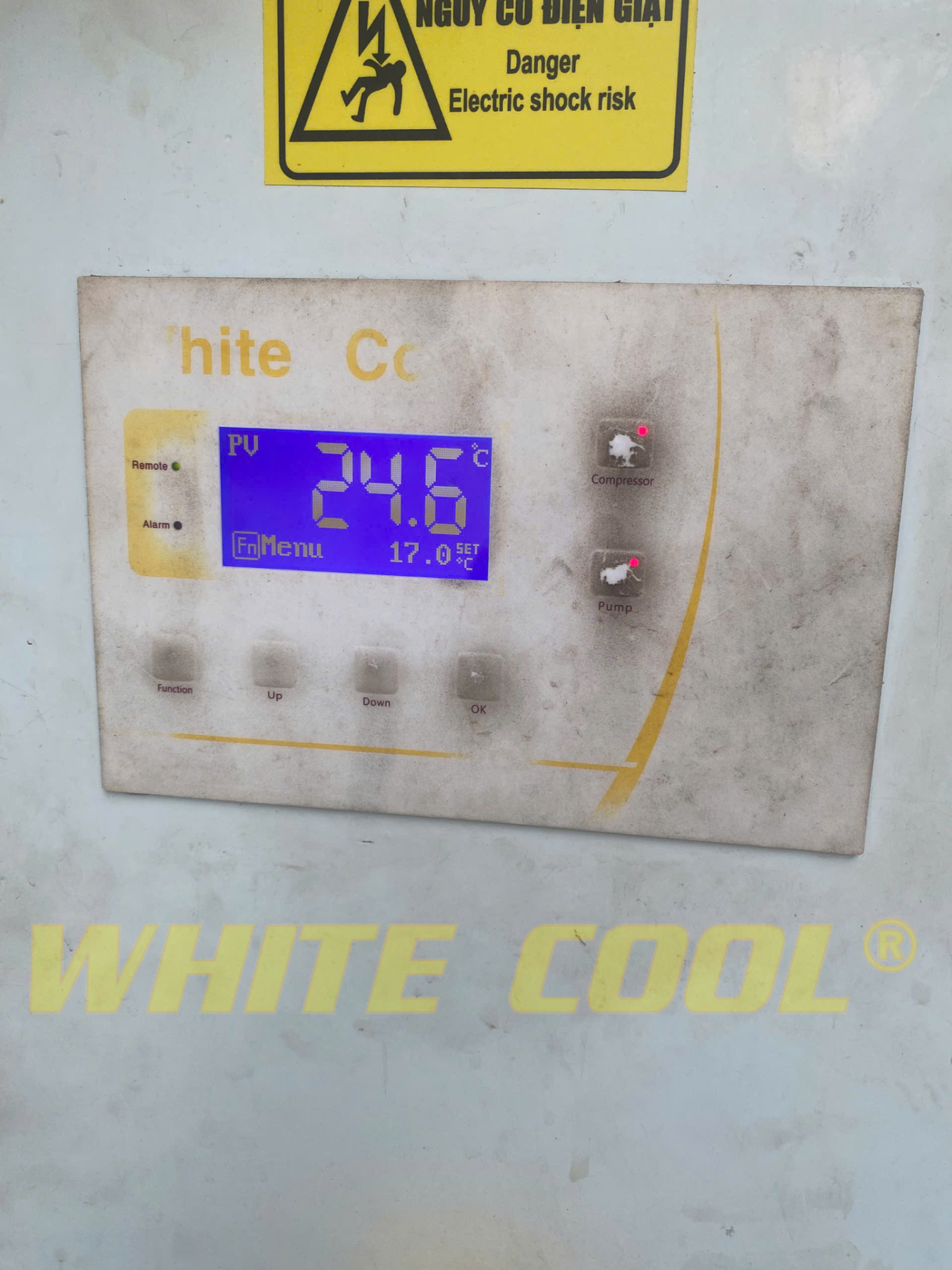
CONTINUOUS RUNNING BUT NOT ACHIEVING EFFICIENCY
The chiller is running but not reaching the required temperature, causing it to run longer than usual.
-
Causes:
- Chiller capacity is not suitable for the actual load
- Equipment degradation after prolonged use
- Changing environmental conditions
-
Solution:
- Reassess system capacity
- Upgrade to a solution such as White Cool DC Inverter Chiller to optimize efficiency
- Check the entire cooling system
WATER DISCHARGE TEMPERATURE NOT MEETING REQUIREMENTS
The machine is running but the water is not as cold as desired.
-
Causes:
- Sudden increase in plant heat load exceeding the initial chiller design capacity
- Compressor efficiency reduced (damaged valve plates, worn shaft)
- Inaccurate temperature sensor
-
Solution:
- Recheck the actual total load of the business
- Use specialized measuring equipment to re-verify the accuracy of the sensor
- Maintain and overhaul the compressor if mechanical efficiency is detected.
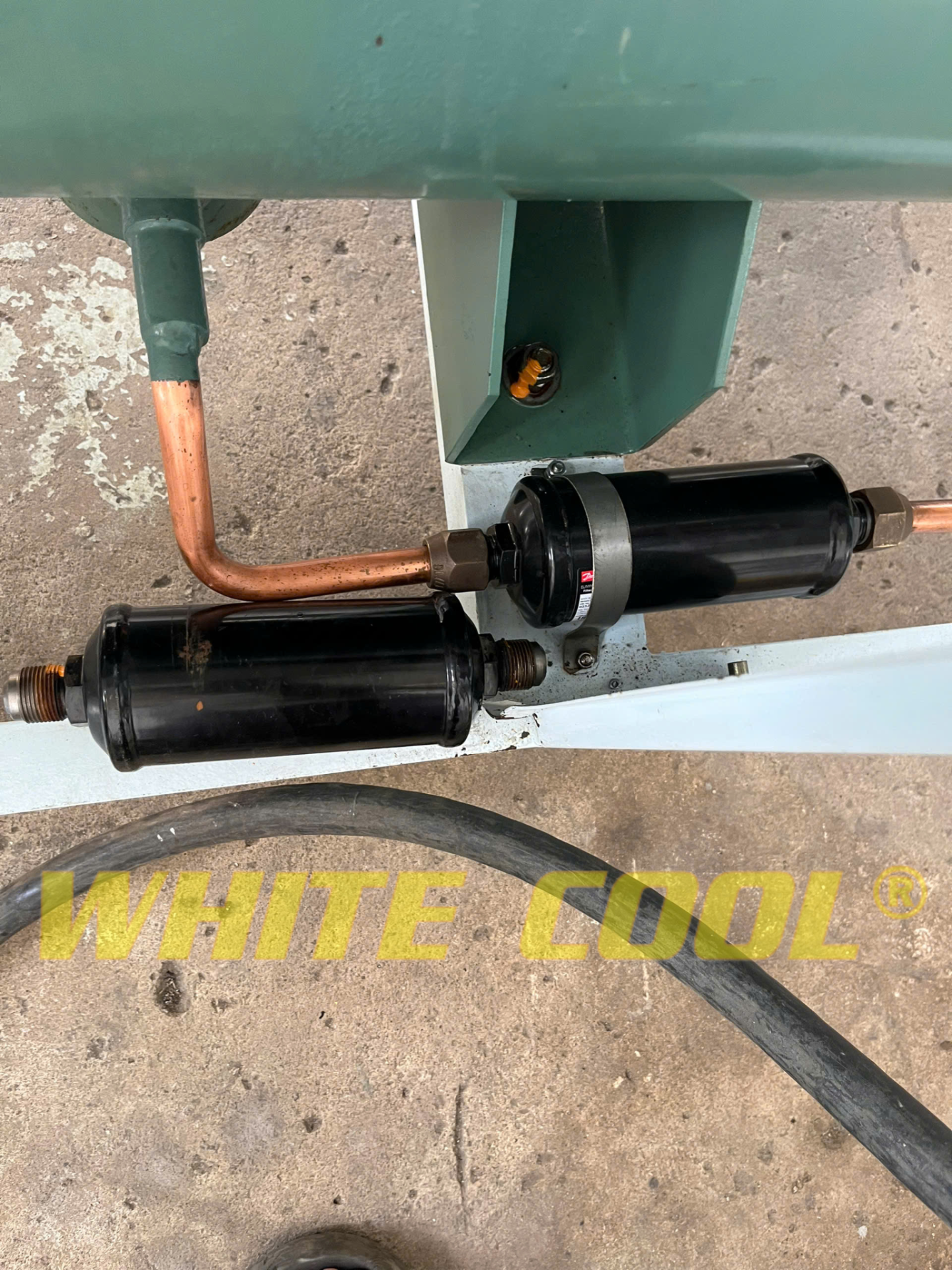
UNUSUALLY HIGH POWER CONSUMPTION
Sudden increase in electricity costs is a warning sign that the system is operating inefficiently.
-
Causes:
- Machine overloading
- Worn components
- Suboptimal control system
-
Solution:
- Check operating load levels
- Perform regular maintenance of the entire system
- Improve the control system to optimize power consumption
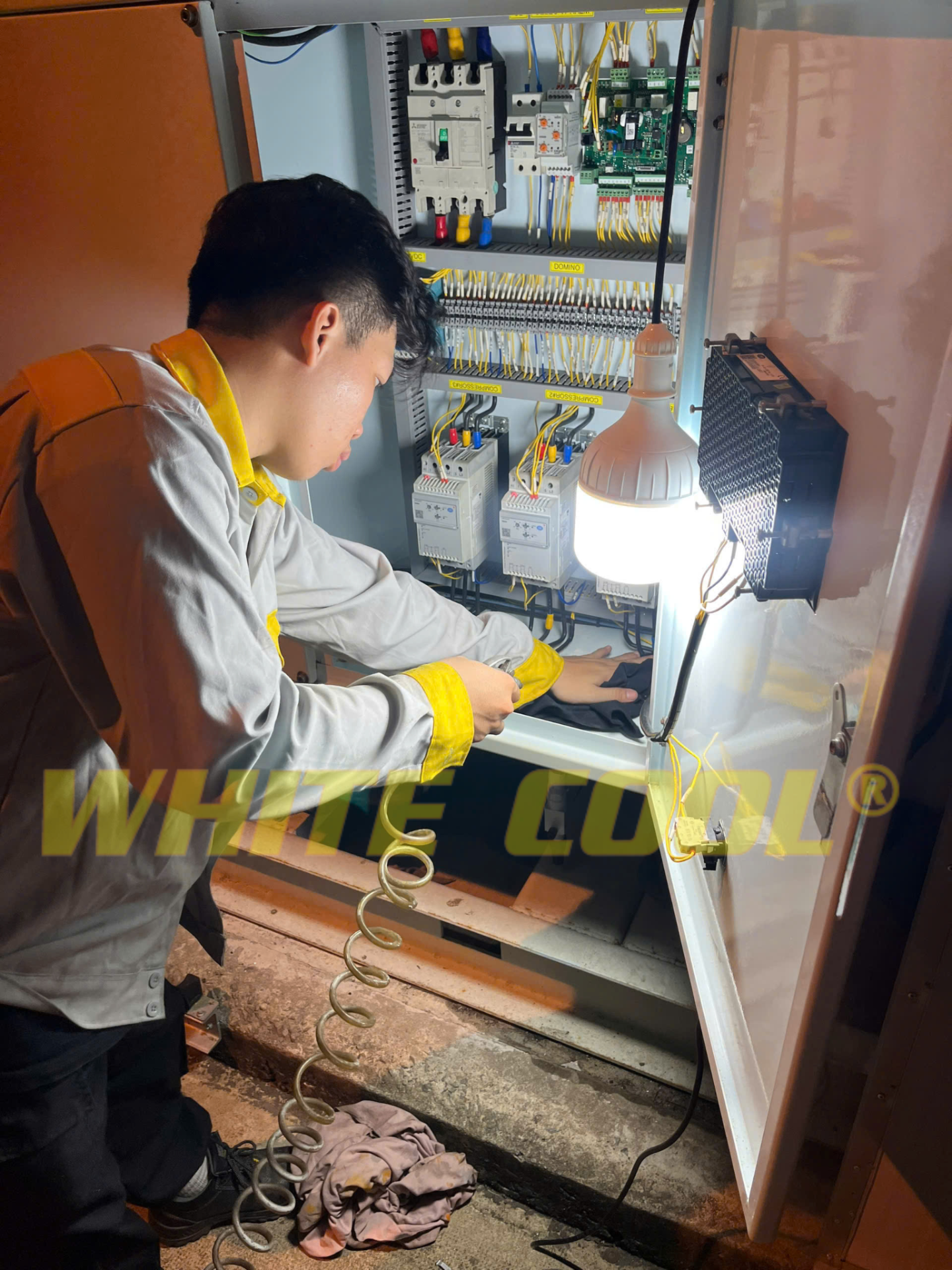
UNUSUAL NOISE DURING OPERATION
Unusual noise is a clear sign of mechanical or system failure.
-
Causes:
- Bearing failure, fan failure, or compressor failure
- Loose components
- Strong vibration during operation
-
Solutions:
- Inspect and replace damaged components-
- Tighten connections
- Recalibrate the system
SUSTAINABLE OPERATION SOLUTIONS FROM WHITE COOL
To minimize these errors, businesses need to focus on two key factors: Proper operation and regular maintenance.
-
Operating log: Monitor pressure, current, and temperature parameters daily to detect abnormalities early.
-
Water treatment: Invest in a water treatment system for the cooling tower to prevent limescale buildup in the pipes.
-
Choosing a reputable maintenance provider: A thorough maintenance process including insulation testing, compressor oil analysis, and heat exchanger cleaning will extend the machine's lifespan by 5-10 years.
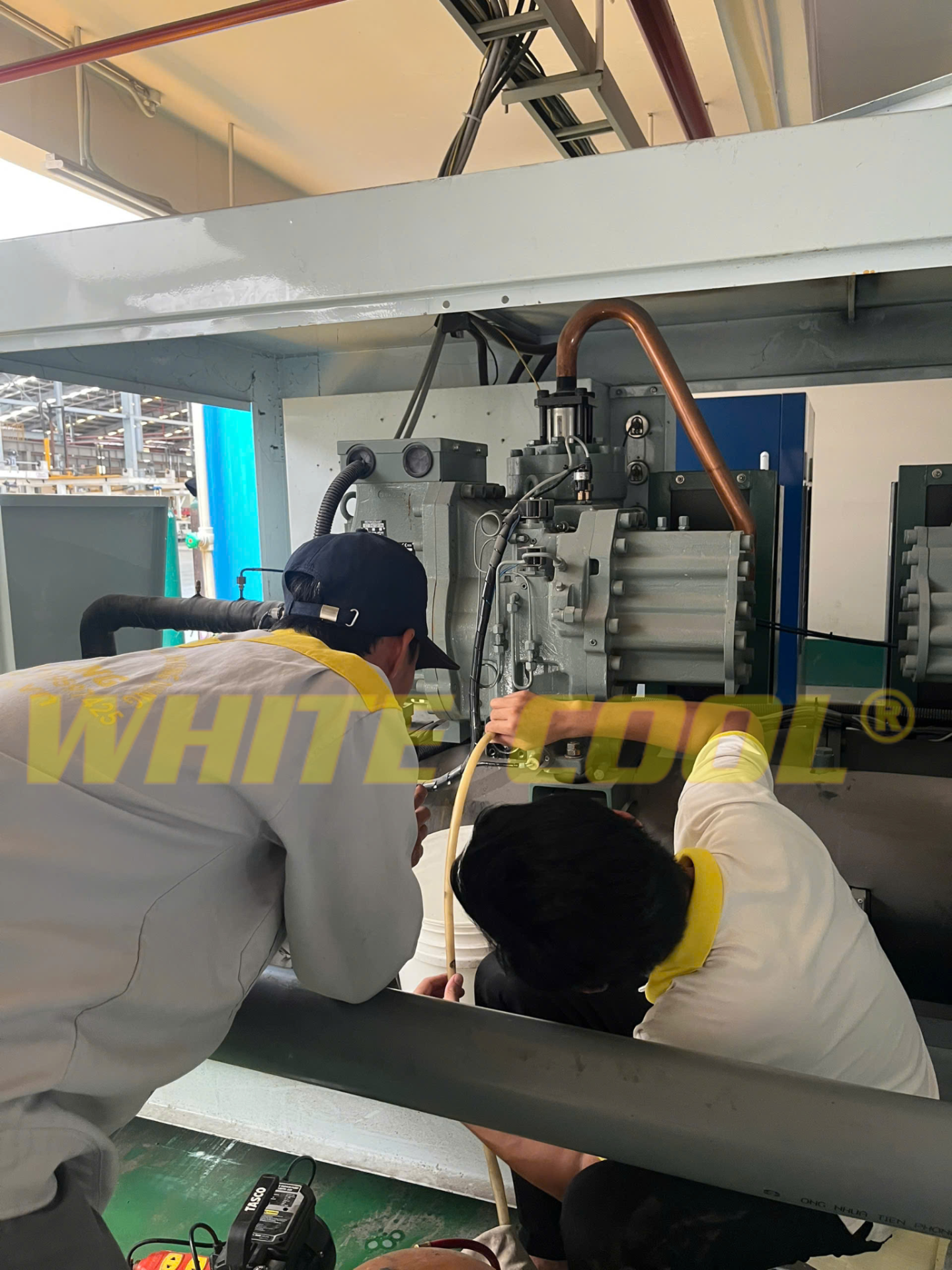
CONCLUSION
Understanding common chiller operation problems will help businesses proactively control their cooling systems.
Investing in maintenance and optimizing operations not only reduces costs but also ensures long-term production efficiency – especially in high-precision industries such as plastics, food, or electronics.
Contact White Cool's technical team immediately for advice and support to ensure uninterrupted production.