



WHAT IS AN INVERTER IN A CHILLER SYSTEM?
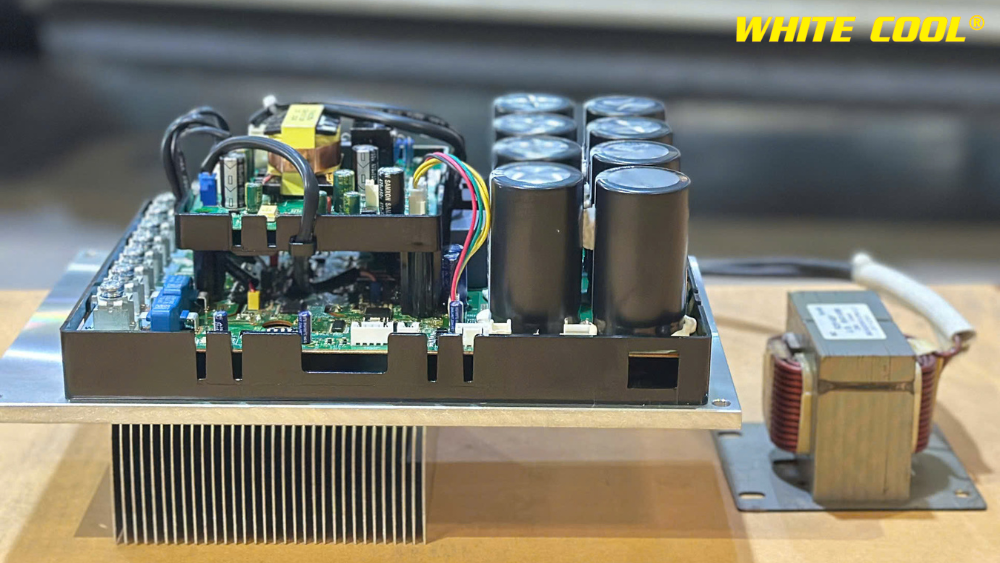
An inverter, also known as a Variable Frequency Drive (VFD), is a device used to control motor speed by adjusting the frequency of the electrical power supplied to the motor.
In industrial chiller systems, inverters are commonly applied to compressors, chilled water pumps, condenser water pumps, cooling tower fans, and condenser fans. Instead of operating continuously at 100% capacity, the inverter allows the system to automatically adjust operating speed according to the actual cooling load of the factory.
This enables the chiller system to operate more flexibly, especially during periods when the cooling demand is lower than the design capacity.
WHY DOES AN INVERTER CHILLER HELP SAVE ENERGY?
Most chiller systems in factories do not operate continuously at maximum load. Cooling demand often changes depending on production output, weather conditions, operating shifts, or manufacturing processes.
When the cooling load decreases, the inverter allows the motor to reduce its speed instead of running at full load and repeatedly switching on and off like conventional systems. This significantly reduces power consumption, especially for pump and fan applications.
In addition, inverters help reduce startup current, minimize sudden electrical overload, and reduce stress on the factory’s electrical system. They also improve operational stability, reduce mechanical vibration, and minimize equipment wear by avoiding frequent start-stop cycles. Chilled water temperature can also be maintained more consistently compared to traditional on/off operation.
WHEN IS AN INVERTER IN A CHILLER SYSTEM MOST EFFECTIVE?
Inverters provide the greatest benefits in systems where cooling loads fluctuate frequently or where the system typically operates at partial load rather than full load.
Industries such as food processing, plastics, pharmaceuticals, and commercial buildings are often ideal for inverter chillers because their cooling demand changes throughout the day.
Additionally, systems operating continuously for 16–24 hours per day usually achieve a faster return on investment due to the accumulated energy savings over time.
However, inverter efficiency depends heavily on overall system design. If the heat rejection system performs poorly, water flow is unstable, or control settings are not optimized, the actual energy-saving performance can be significantly reduced.
WHEN DOES AN INVERTER CHILLER NOT PROVIDE HIGH EFFICIENCY?
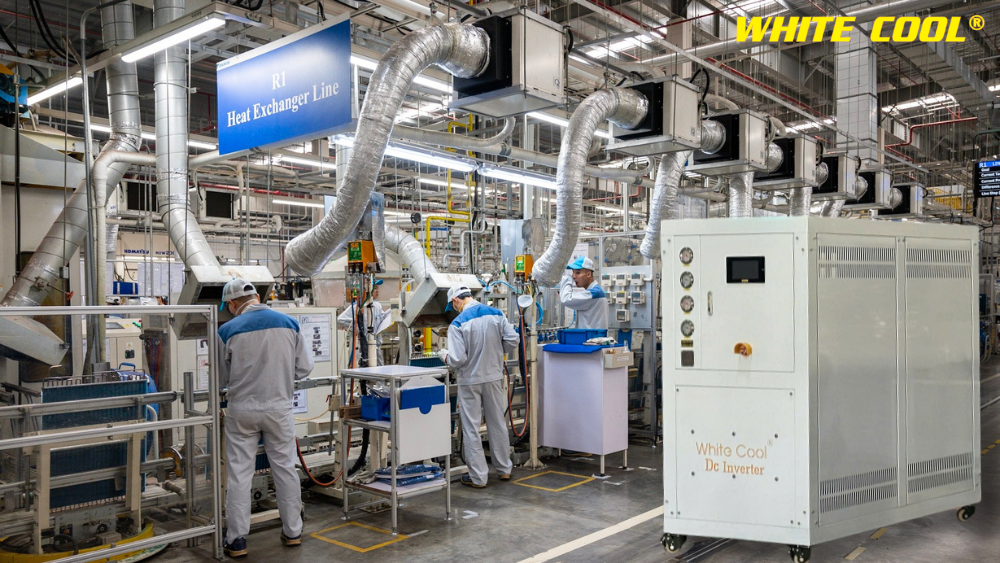
If the system operates almost continuously at 90–100% load, the inverter has limited opportunities to reduce motor speed. In such cases, the energy-saving benefits may not justify the additional investment cost.
Another common mistake is selecting an oversized chiller system for “future capacity backup.” This can cause the system to operate at excessively low loads, resulting in poor efficiency and more complicated inverter control.
Furthermore, many businesses focus only on installing inverters while ignoring overall system optimization. If the condenser is dirty, the cooling tower performs poorly, the piping system loses efficiency, or maintenance is not performed properly, the inverter alone cannot deliver meaningful energy savings.
WHITE COOL – OPTIMIZED CHILLER SOLUTIONS FOR BUSINESSES
At White Cool, we understand that every factory has different cooling loads and operating requirements. Therefore, selecting an inverter chiller solution should be based on actual operational data rather than simply following technology trends.
White Cool provides consulting, design, and manufacturing solutions tailored to each operating model, helping businesses optimize system performance and control energy costs more effectively.
We focus on complete system solutions, from cooling load calculations and equipment configuration to heat rejection optimization, operation support, and long-term maintenance. Our goal is not only to supply equipment but also to help businesses build stable, energy-efficient, and sustainable cooling systems.
CONCLUSION
Inverters in chiller systems can deliver significant energy savings when applied correctly and matched to actual operating conditions.
The key is not simply whether the system uses an inverter, but whether the entire chiller system is properly designed, stably operated, and fully optimized for long-term efficiency.
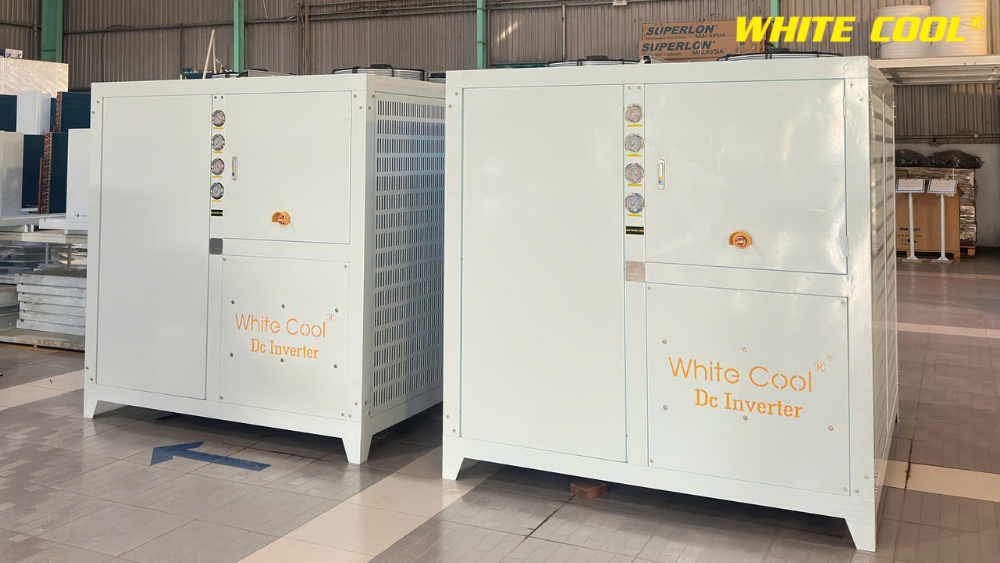
Contact White Cool today for consultation on the most suitable energy-saving chiller DC Inverter solution for your business.