



STARTING THE WORK DAY: OVERALL SYSTEM SURVEY AND ASSESSMENT
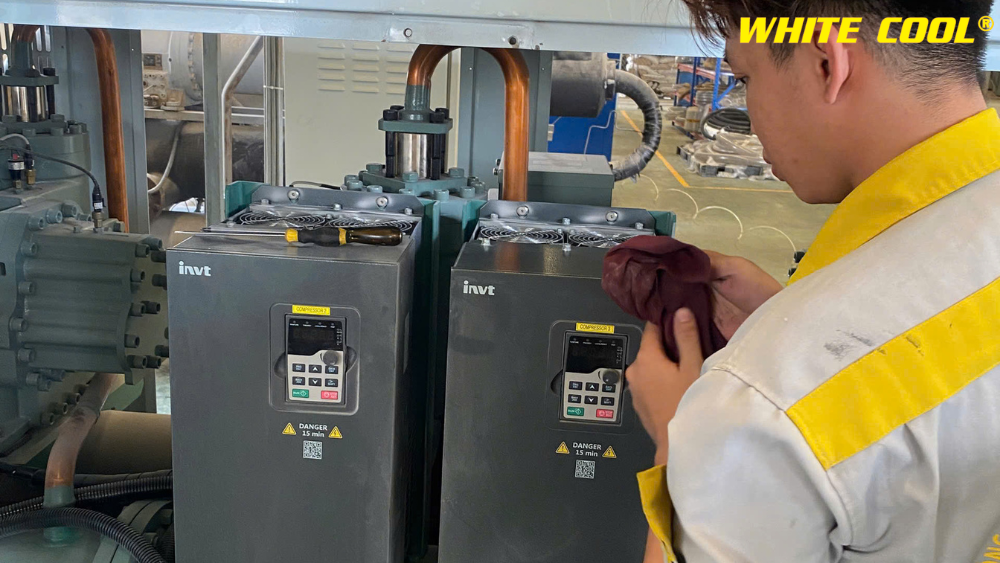
Upon arriving at the factory, White Cool's technical team doesn't rush to intervene in the system but begins with an overall survey. This is a crucial step in understanding the actual operating condition of the chiller.
Parameters such as inlet and outlet water temperature, pressure, current, noise level, and vibration are carefully recorded. Simultaneously, technicians communicate directly with the plant's operations department to understand any recent abnormal signs. This initial assessment helps accurately identify system "weaknesses," thereby developing appropriate maintenance plans instead of addressing issues based on intuition.
SYSTEM CLEANING: A KEY FACTOR IN PERFORMANCE
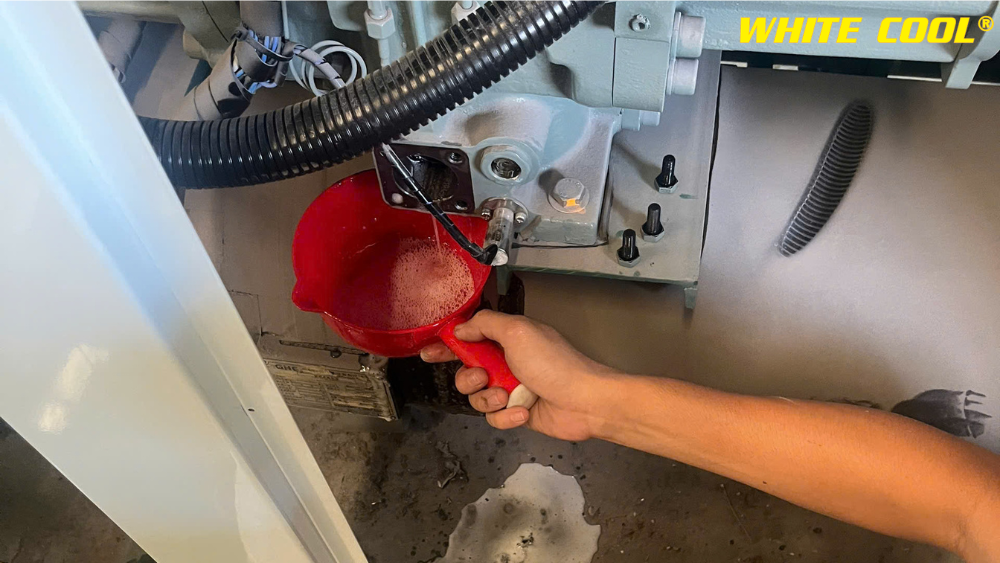
One of the common causes of reduced chiller efficiency is the accumulation of dirt and scale over time in the heat exchanger. Therefore, cleaning always takes up a significant portion of the maintenance process.
In the plant, the technical team cleans the condenser and evaporator coils using specialized equipment. Removing scale deposits improves heat exchange efficiency, reduces compressor stress, and significantly saves energy consumption.
For water-cooled systems, inspection and treatment of scale deposits in pipes and cooling towers are also carried out simultaneously. This is an often overlooked factor but directly affects the lifespan of the entire system.
TECHNICAL INSPECTION: EARLY DETECTION OF POTENTIAL RISKS
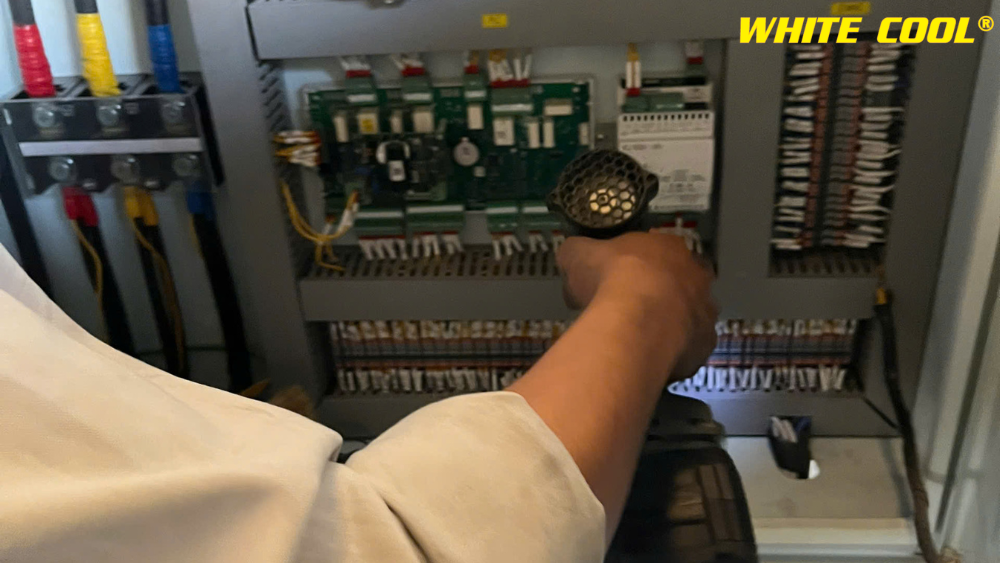
After the system is cleaned, the technical team conducts a detailed inspection of each critical component of the chiller. The compressor, expansion valve, temperature sensors, electrical system, and control panel are all inspected according to strict technical standards.
In particular, checking the refrigerant level and operating pressure ensures that the chiller operates at its designed capacity. If any signs of gas leaks or shortages are detected, technicians will address them on-site to prevent the system from overloading during peak season.
Simultaneously, auxiliary equipment such as water pumps and cooling fans are also inspected to ensure the entire system operates synchronously and stably.
TESTING AND OPTIMIZATION
After completing the inspection and cleaning steps, the chiller system is restarted for testing. This is a crucial stage to evaluate the effectiveness after maintenance.
Operating parameters continue to be monitored and compared with the initial data. If necessary, the technical team will fine-tune the settings to optimize performance, helping the system achieve its best operating state.
White Cool aims not only to "fix and get it running," but also to comprehensively optimize the system to help businesses save on electricity costs and minimize long-term risks.
REPORT AND CONSULTATION: POST-MAINTENANCE VALUE
At the end of each workday, the technical team will prepare a detailed report on the system's condition before and after maintenance. This report not only helps the business understand the equipment's current state but also serves as a basis for developing future periodic maintenance plans.
In addition, White Cool also advises the factory on how to operate the chiller efficiently, when the next inspection is needed, and upgrade solutions if necessary. This is the differentiating value that professional maintenance services bring.
CONCLUSION
A chiller maintenance day at the factory is not simply about cleaning or inspecting the equipment, but a comprehensive technical process to ensure the system operates stably, reliably, and cost-effectively.
With practical experience and a highly skilled technical team, White Cool not only helps businesses "resolve issues" but also partners in optimizing the performance of their cooling systems. Investing in regular maintenance is a smart way to protect production operations and improve business efficiency in the long term.
Contact White Cool today for advice and support to find the best solutions for your business!