



WHAT IS CHILLER LIFE CYCLE COST AND WHY DOES IT MATTER?
Chiller Life Cycle Cost (LCC) includes all expenses incurred from initial investment to end of operation: equipment cost, installation, energy consumption, maintenance, repairs, and component replacement. In practice, energy consumption often accounts for the largest share, reaching up to 60–70% of the total lifecycle cost. This means that an inefficient system, even if cheaper to purchase, will cause businesses to “pay extra” every day over many years of operation.
Moreover, a chiller’s energy consumption is not fixed—it depends on system design, capacity selection, and actual operating conditions. A system that does not match the cooling load will frequently run under partial load or overload conditions, significantly reducing efficiency. Over time, even small efficiency gaps accumulate into substantial costs.
Therefore, when evaluating a chiller system, businesses need to look beyond the initial investment and consider long-term operating costs. A high-efficiency solution from the start not only reduces monthly energy expenses but also creates sustainable financial advantages throughout the system’s lifecycle.
LOW INITIAL COST: SHORT-TERM GAIN, LONG-TERM PAIN
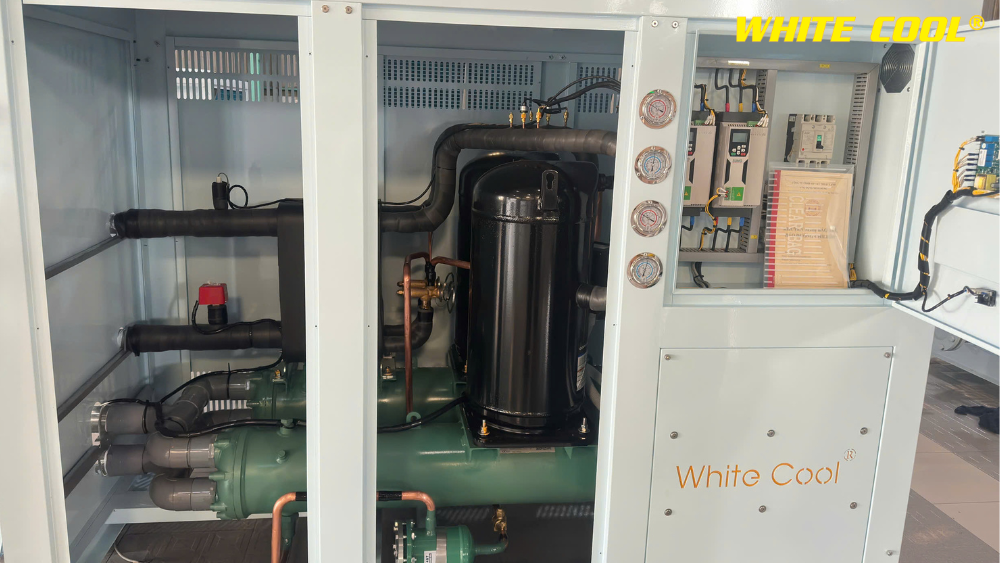
Many businesses choose chillers based on lower upfront costs while overlooking critical technical factors such as energy efficiency, load adaptability, and component quality. As a result, the system consumes more energy, degrades faster, and requires more frequent repairs.
Additionally, lower-cost systems often lack the ability to optimize performance based on actual load conditions. As cooling demand fluctuates across production shifts, the system cannot adjust flexibly, leading to overloading or underloading—wasting energy and reducing equipment lifespan.
HIDDEN COSTS BUSINESSES OFTEN OVERLOOK
Beyond electricity expenses, “hidden costs” also contribute significantly to the total lifecycle cost. Ineffective maintenance, lack of genuine spare parts, or prolonged downtime can disrupt production and directly impact revenue.
Furthermore, unstable system performance can affect product quality, especially in industries requiring strict temperature control. These losses are often not considered upfront but can have serious long-term consequences.
WHITE COOL’S SOLUTION FOR OPTIMIZING LIFE CYCLE COST
Instead of focusing solely on initial investment costs, White Cool aims to optimize the total lifecycle cost for businesses. Each chiller system is designed based on real cooling load analysis, ensuring it operates according to actual demand and avoids energy waste.
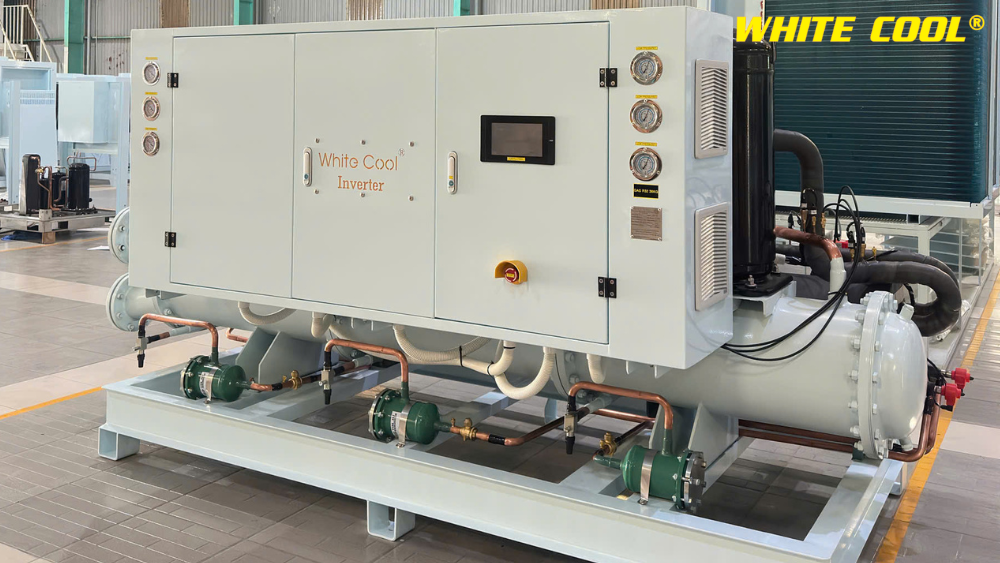
White Cool prioritizes technologies that enhance efficiency, such as inverter control, optimized heat exchangers, and real-time monitoring systems. This allows businesses to track key performance indicators continuously, detect abnormalities early, and make timely adjustments.
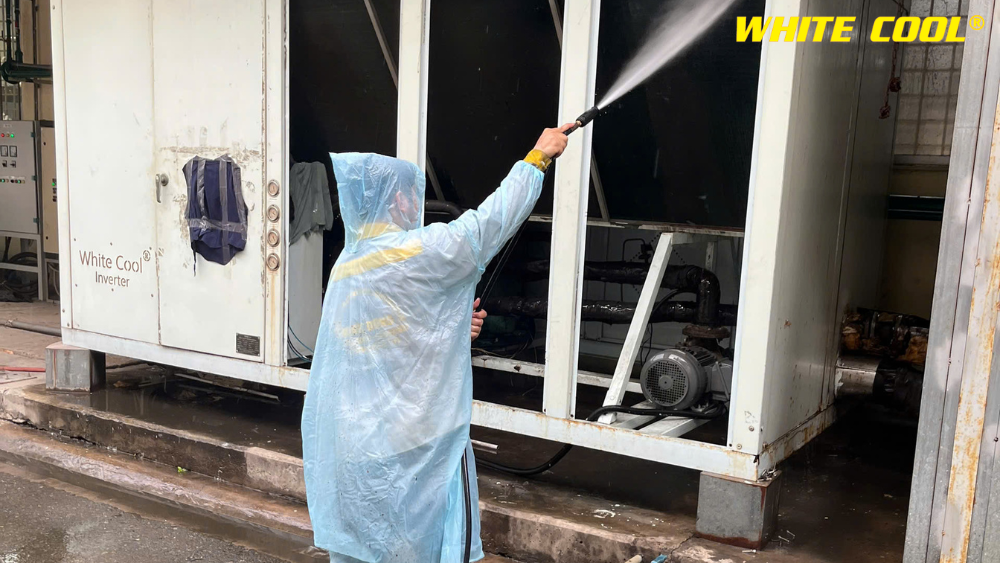
In addition, structured maintenance and servicing plans help keep the system operating at optimal conditions, minimizing failures and extending equipment lifespan. White Cool not only supplies equipment but also partners with businesses throughout the entire operational journey.
CONCLUSION
A “low-cost” chiller system may reduce initial investment, but without proper selection and operation, the total lifecycle cost can be significantly higher. Smart investment is not about choosing the lowest price—it is about selecting a solution that delivers sustainable performance and long-term cost efficiency.
With a data-driven and performance-focused approach, White Cool helps businesses control costs, improve operational efficiency, and maximize investment value.
Contact White Cool today for expert consultation on optimizing your chiller lifecycle cost and receive a detailed quotation tailored to your factory.