



WHAT IS A CHILLER PLC CONTROLLER?
A PLC is a programmable logic controller designed to automatically monitor and control every aspect of a Chiller system. It continuously collects signals from various sensors installed throughout the system, including temperature sensors, pressure sensors, water flow meters, water level sensors, current transformers, voltage sensors, and many other operating parameters.
After receiving these signals, the PLC processes the data according to its programmed logic and sends appropriate commands to the compressor, water pumps, cooling tower fans, solenoid valves, electronic expansion valves, and other system components. This entire process occurs within milliseconds, allowing the Chiller to respond quickly to changing cooling demands.
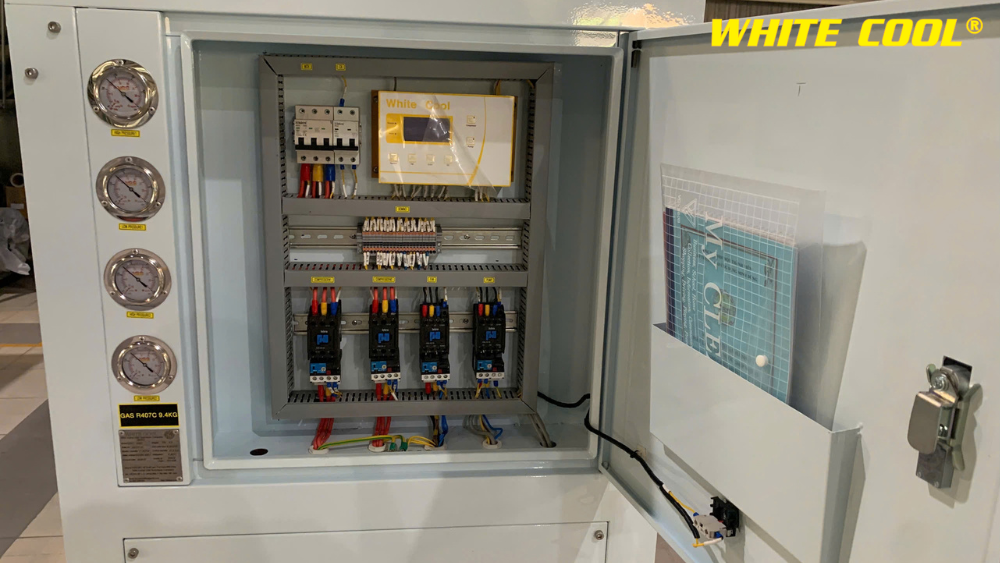
HOW DOES A PLC WORK IN A CHILLER SYSTEM?
A PLC operates through a continuous cycle consisting of three main stages: data acquisition, information processing, and control execution.
First, sensors continuously transmit real-time operating data to the PLC. The controller compares these values with predefined setpoints. If the chilled water temperature rises or the cooling load changes, the PLC automatically adjusts the compressor capacity, pump operation, or cooling fan speed to restore optimal operating conditions.
If abnormal conditions occur—such as high pressure, low pressure, excessive temperature, phase loss, overcurrent, or insufficient water flow—the PLC immediately activates alarms or automatically shuts down the system to protect critical components from severe damage.
Thanks to this automatic control process, the Chiller can maintain stable cooling performance even when operating conditions fluctuate continuously.
HOW DOES A PLC IMPROVE EFFICIENCY AND SAVE ENERGY?
One of the greatest advantages of a PLC is its ability to optimize system performance according to actual cooling demand.
Instead of operating all equipment at full capacity continuously, the PLC adjusts compressor output, water pump operation, and cooling fan speed based on the real-time cooling load. When demand decreases, the system automatically reduces capacity, minimizing unnecessary power consumption.
For Chiller systems equipped with Variable Frequency Drives (VFDs) or Inverter technology, the PLC works together with the inverter to precisely regulate motor speed. This significantly reduces electricity consumption while minimizing mechanical wear and extending equipment lifespan.
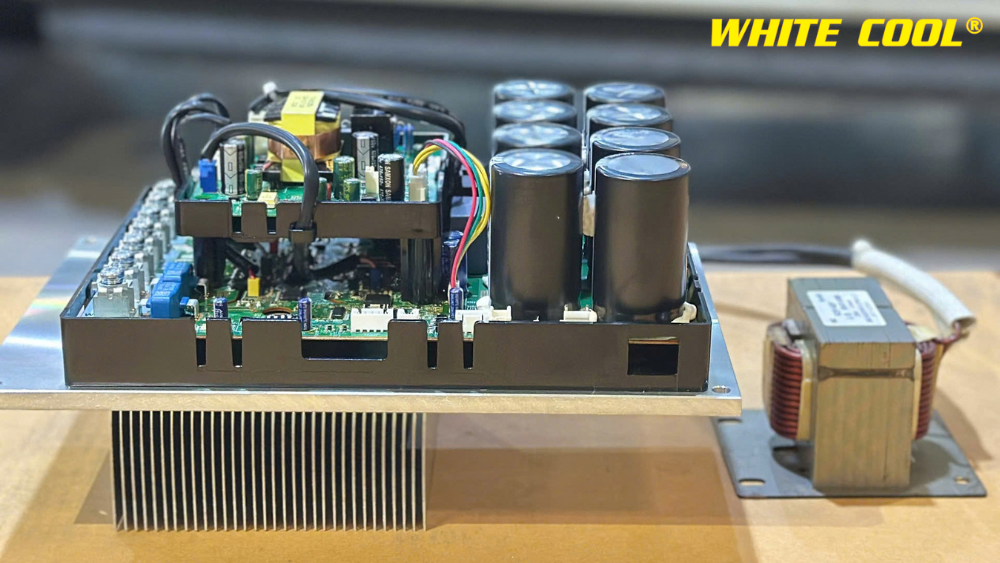
HOW DOES A PLC MONITOR AND PROTECT THE ENTIRE SYSTEM?
In addition to controlling system operation, a PLC functions as a comprehensive monitoring and protection platform.
Every operating parameter is continuously monitored and recorded, allowing maintenance engineers to evaluate system performance and diagnose potential issues efficiently. When a fault occurs, the PLC displays alarm codes, identifies possible causes, and supports faster troubleshooting.
Protective functions—including compressor overload protection, evaporator freeze protection, water flow protection, high-pressure protection, low-pressure protection, over-temperature protection, and power failure protection—are all managed automatically by the PLC. These features significantly reduce the risk of equipment damage and minimize unexpected downtime.
REMOTE MONITORING AND CONTROL WITH PLC
As digital transformation continues to reshape industrial manufacturing, many Chiller systems now integrate PLCs with Human-Machine Interfaces (HMIs), SCADA platforms, and Industrial Internet of Things (IIoT) technologies.
Through network connectivity, operators can monitor system status, adjust operating parameters, and receive alarm notifications remotely using computers, smartphones, or centralized control rooms.
This capability is particularly valuable for factories operating multiple production lines or several Chiller systems simultaneously, enabling more efficient management and faster response to unexpected situations.
PLC PROGRAMMING CAN BE CUSTOMIZED FOR DIFFERENT INDUSTRIES
Every manufacturing industry has unique cooling requirements, which means PLC control logic should be tailored accordingly.
For the electronics industry, PLC programs can prioritize precise temperature control. In food and beverage production, the focus may be on continuous and stable operation. For plastics, chemical processing, and pharmaceutical manufacturing, PLCs can be programmed to optimize cooling capacity according to different production stages.
This high level of flexibility makes PLC technology an ideal control solution for a wide variety of industrial applications.
WHITE COOL – YOUR PARTNER FOR INTELLIGENT PLC-CONTROLLED CHILLER SOLUTIONS
White Cool designs and manufactures customized industrial Chiller systems equipped with advanced PLC control solutions tailored to each customer's operational requirements.
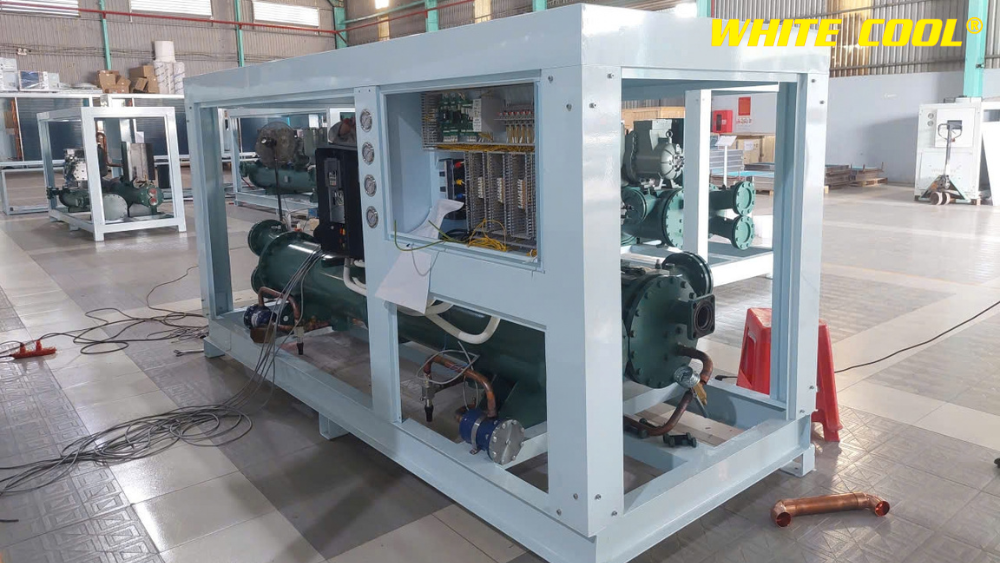
Our engineering team conducts cooling load analysis, evaluates production processes, and develops optimized PLC control programs to ensure stable operation, maximum energy efficiency, and precise performance based on actual production needs. Every Chiller undergoes comprehensive testing, commissioning, and parameter optimization before delivery to guarantee reliable cooling performance and long-term operational stability.
In addition to Chiller manufacturing, White Cool provides PLC control system upgrades, preventive maintenance services, control program optimization, and comprehensive after-sales technical support. Our goal is to deliver intelligent, efficient, and sustainable cooling solutions that help businesses maximize productivity while reducing operating costs.
If your business is planning to invest in a new Chiller system, upgrade an existing PLC controller, or optimize the performance of your current cooling system, contact White Cool today. Our experienced engineers are ready to recommend the most suitable solution for your specific production requirements.
CONCLUSION
A PLC serves as the intelligent control center of a Chiller system, enabling automatic, precise, and safe operation. By continuously collecting operating data, processing real-time information, controlling equipment, and protecting the system from abnormal conditions, the PLC plays a critical role in improving cooling performance, reducing energy consumption, and extending equipment lifespan.
Investing in a properly programmed PLC control system not only helps businesses manage their Chiller systems more efficiently but also reduces the Total Cost of Ownership (TCO) throughout the equipment's lifecycle. With extensive experience in designing, manufacturing, and integrating PLC control systems for industrial Chillers, White Cool is committed to delivering modern, intelligent, and reliable cooling solutions that meet today's operational demands while preparing businesses for the future.