



WHAT IS A CHILLER ALARM?
A Chiller Alarm is a warning system integrated into the PLC or central controller of the Chiller. The controller continuously monitors operating parameters such as temperature, pressure, water flow rate, electrical current, voltage, and equipment status.
Whenever any parameter exceeds its preset operating limit, the PLC generates an Alarm or automatically shuts down the system to protect the equipment. Some Alarms simply notify operators to inspect the system, while protective Alarms immediately stop the Chiller to prevent severe equipment damage.
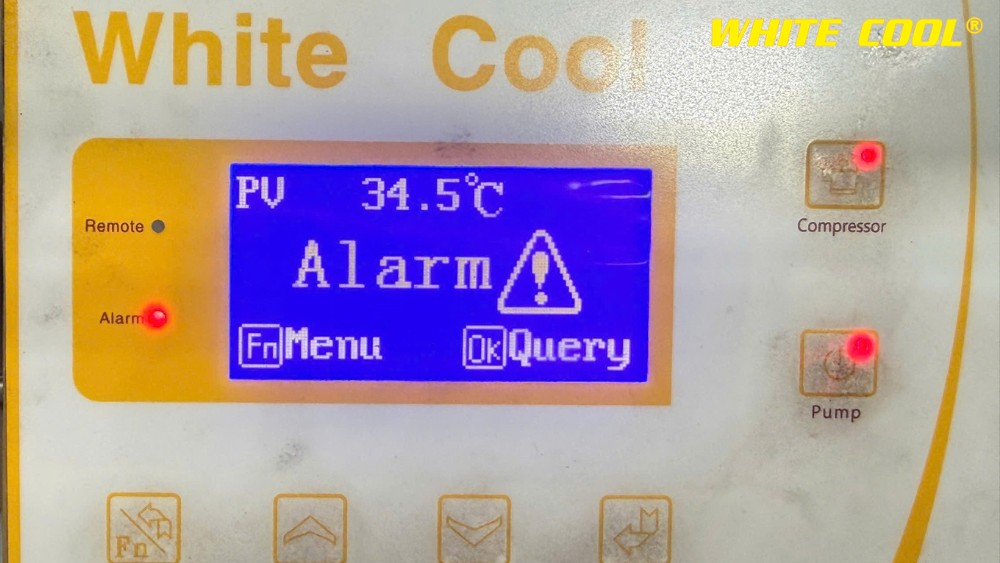
HIGH PRESSURE ALARM
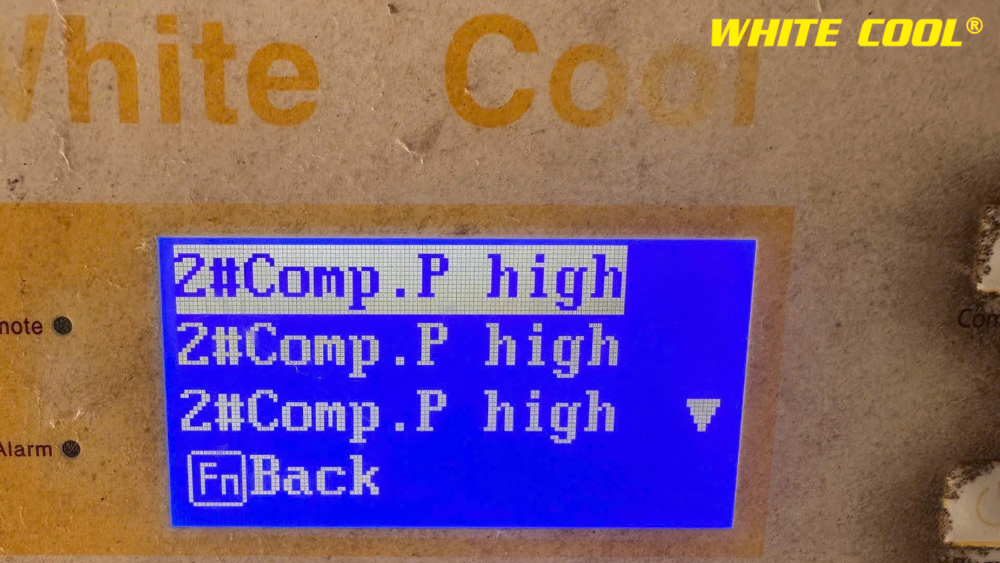
High Pressure Alarm is one of the most common warnings in both water-cooled and air-cooled Chillers.
Possible causes include dirty condenser coils, insufficient condenser water flow, poor cooling fan performance, or excessively high ambient temperatures. When the condensing pressure exceeds the allowable limit, the PLC activates an Alarm or stops the compressor to ensure safe operation.
If left unresolved, the compressor will operate under heavier loads, increasing power consumption and reducing equipment lifespan.
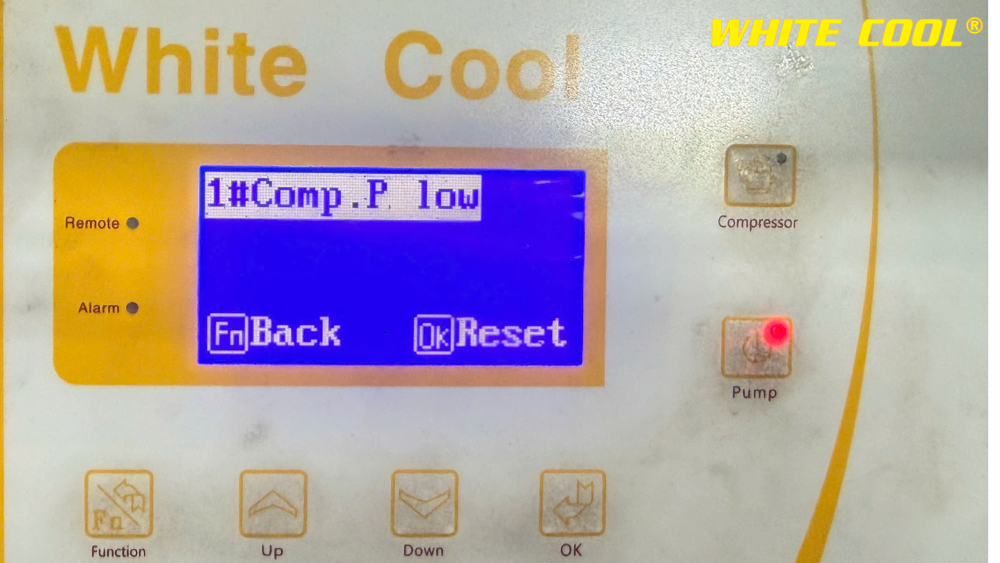
LOW PRESSURE ALARM
A Low Pressure Alarm is generally associated with insufficient refrigerant or abnormal evaporation conditions.
Common causes include refrigerant leakage, low refrigerant charge, malfunctioning expansion valves, evaporator icing, or inadequate chilled water flow.
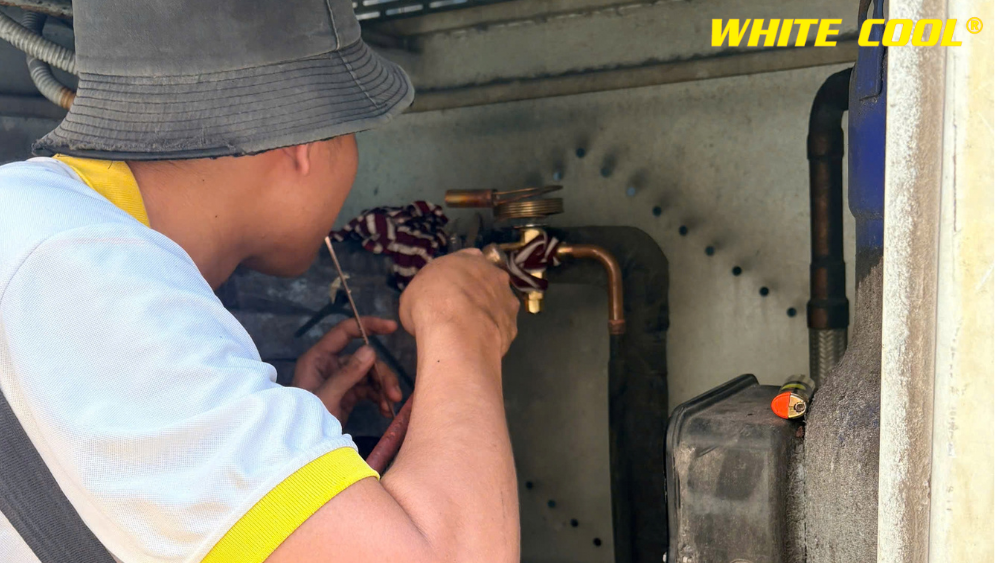
Accurate diagnosis should always be carried out by qualified technicians to avoid unnecessary refrigerant charging or incorrect troubleshooting.
WATER FLOW ALARM
A Chiller requires stable water circulation to maintain efficient heat transfer.
If the water pump fails, valves remain partially closed, pipelines become clogged, or the flow switch cannot detect sufficient water flow, the PLC will trigger a Flow Alarm and may stop the compressor.
This important protection feature helps prevent evaporator freezing and protects critical system components from damage.
HIGH OR LOW TEMPERATURE ALARM
The PLC continuously monitors chilled water temperature and compressor discharge temperature.
If the chilled water temperature deviates from the setpoint or the discharge temperature rises beyond the allowable limit, the controller generates an Alarm. Possible causes include fluctuating cooling loads, reduced heat transfer efficiency, insufficient refrigerant, or degraded compressor oil.
Early corrective action helps maintain cooling performance and protects the compressor from excessive wear.
ELECTRICAL AND MOTOR ALARMS
In addition to refrigeration parameters, the Chiller also continuously monitors the electrical system.
Alarms such as overcurrent, phase loss, phase reversal, overvoltage, undervoltage, and motor overload are automatically detected by the PLC. These protective functions safeguard compressors, water pumps, and cooling fans against electrical failures.
For facilities operating around the clock, regular electrical inspections significantly reduce the risk of unexpected shutdowns.
DO NOT SIMPLY RESET THE ALARM WITHOUT IDENTIFYING THE ROOT CAUSE
One common mistake is resetting the Alarm and restarting the Chiller without investigating the actual cause.
Doing so may allow the same problem to recur repeatedly, eventually leading to serious equipment damage. Every Alarm serves as an early warning signal that helps operators detect potential issues before they become critical.
Whenever an Alarm occurs, all operating parameters should be thoroughly inspected, the root cause identified, and the problem fully resolved before restarting the Chiller.
PREVENTIVE MAINTENANCE REDUCES CHILLER ALARMS
Most Chiller Alarms can be prevented through a well-planned preventive maintenance program.
Cleaning heat exchangers, checking refrigerant pressure, monitoring compressor oil condition, maintaining proper water flow, treating cooling water, and calibrating sensors all help keep the system operating under optimal conditions.
Reviewing historical Alarm records also allows engineers to identify operating trends and detect potential problems before major failures occur.
WHITE COOL – YOUR TRUSTED PARTNER FOR CHILLER ALARM DIAGNOSIS AND PREVENTION
White Cool not only designs and manufactures custom industrial Chillers but also provides comprehensive inspection, maintenance, and optimization solutions to minimize Alarm occurrences and improve system reliability.
Our experienced engineers analyze Alarm histories, identify root causes, evaluate compressor performance, inspect electrical systems, verify water flow conditions, and assess other critical components to recommend the most appropriate solutions. We also help customers establish preventive maintenance programs that reduce downtime, improve energy efficiency, and extend the service life of the entire Chiller system.
In addition to Chiller design, manufacturing, and installation, White Cool provides ongoing maintenance services and professional after-sales technical support. If your business is experiencing recurring Chiller Alarms or looking to optimize system performance, contact White Cool for expert consultation and customized solutions tailored to your operating conditions.
CONCLUSION
A Chiller Alarm is more than just a warning—it is an essential protection mechanism that helps prevent severe equipment failures and ensures safe, reliable system operation. Common Alarms related to high pressure, low pressure, water flow, temperature, and electrical systems should always be properly diagnosed and resolved rather than simply being reset.
By actively monitoring Alarm conditions, implementing preventive maintenance, and continuously tracking operating parameters, businesses can maintain stable cooling performance, reduce repair costs, and maximize the service life of their Chiller systems. With extensive experience in industrial Chiller design, manufacturing, and maintenance, White Cool is committed to helping businesses build durable, energy-efficient cooling systems that meet the demanding requirements of modern industrial applications.